MARINE LUCID DREAM
Aleksei Bordusov aka Aec Interesni Kazki
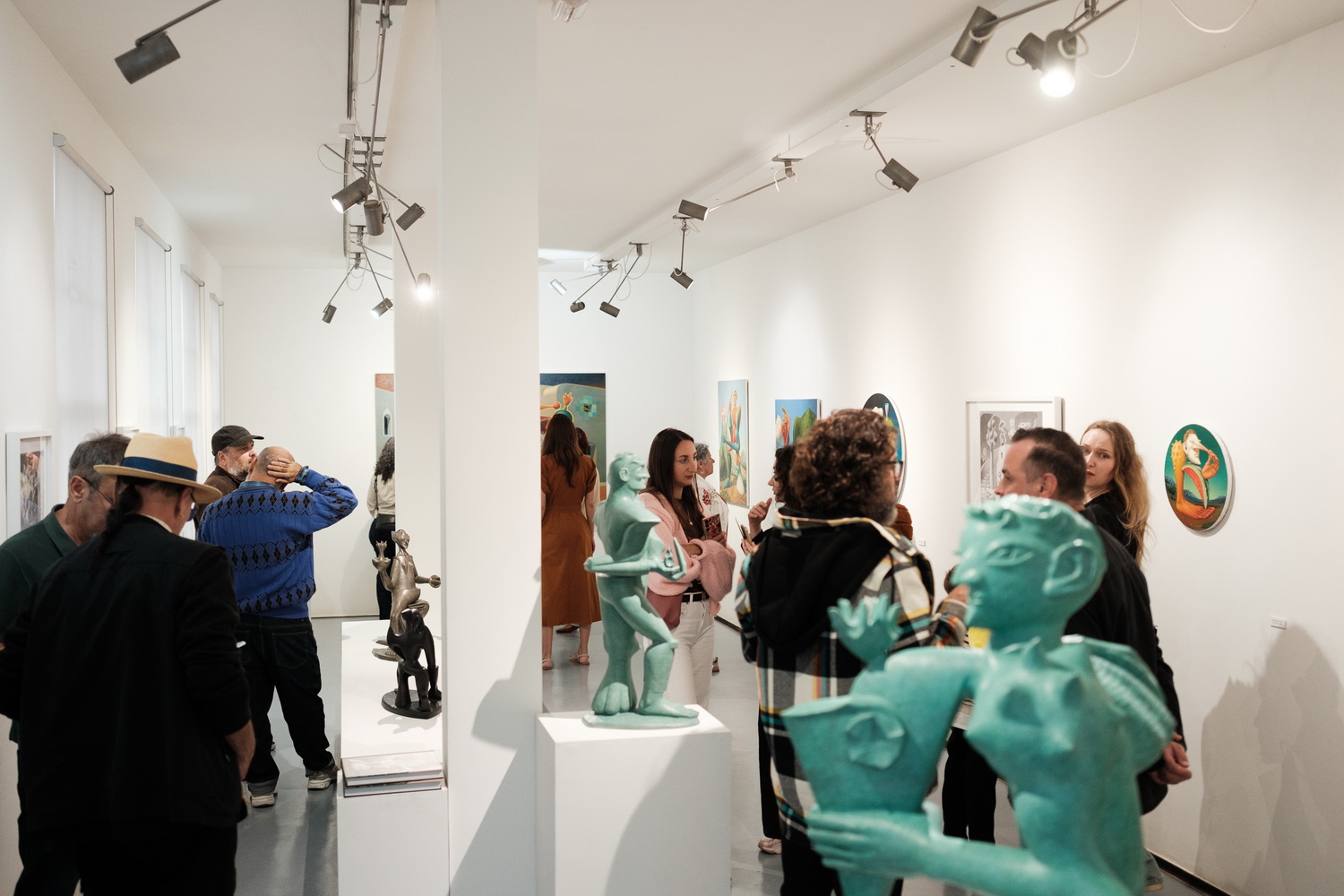
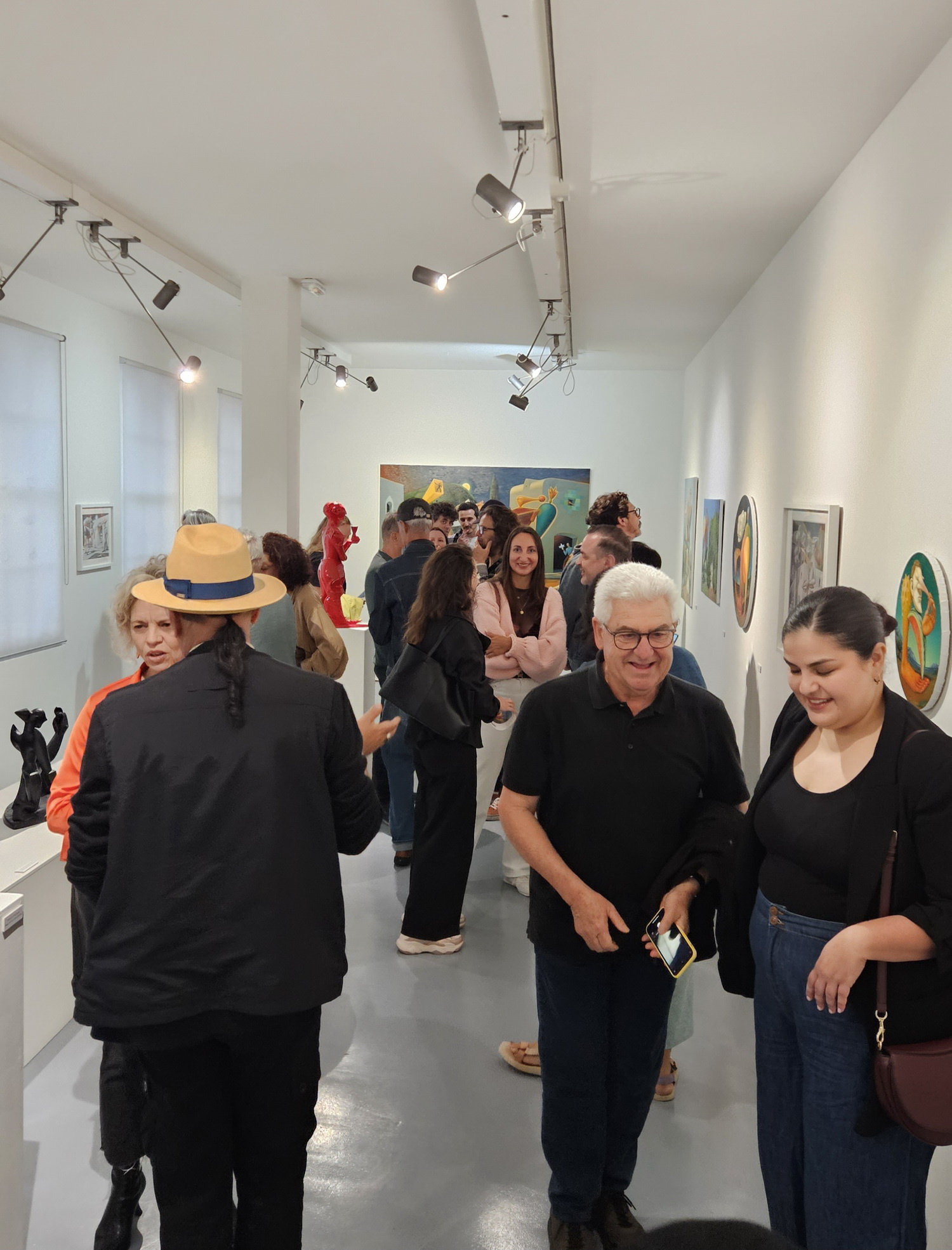
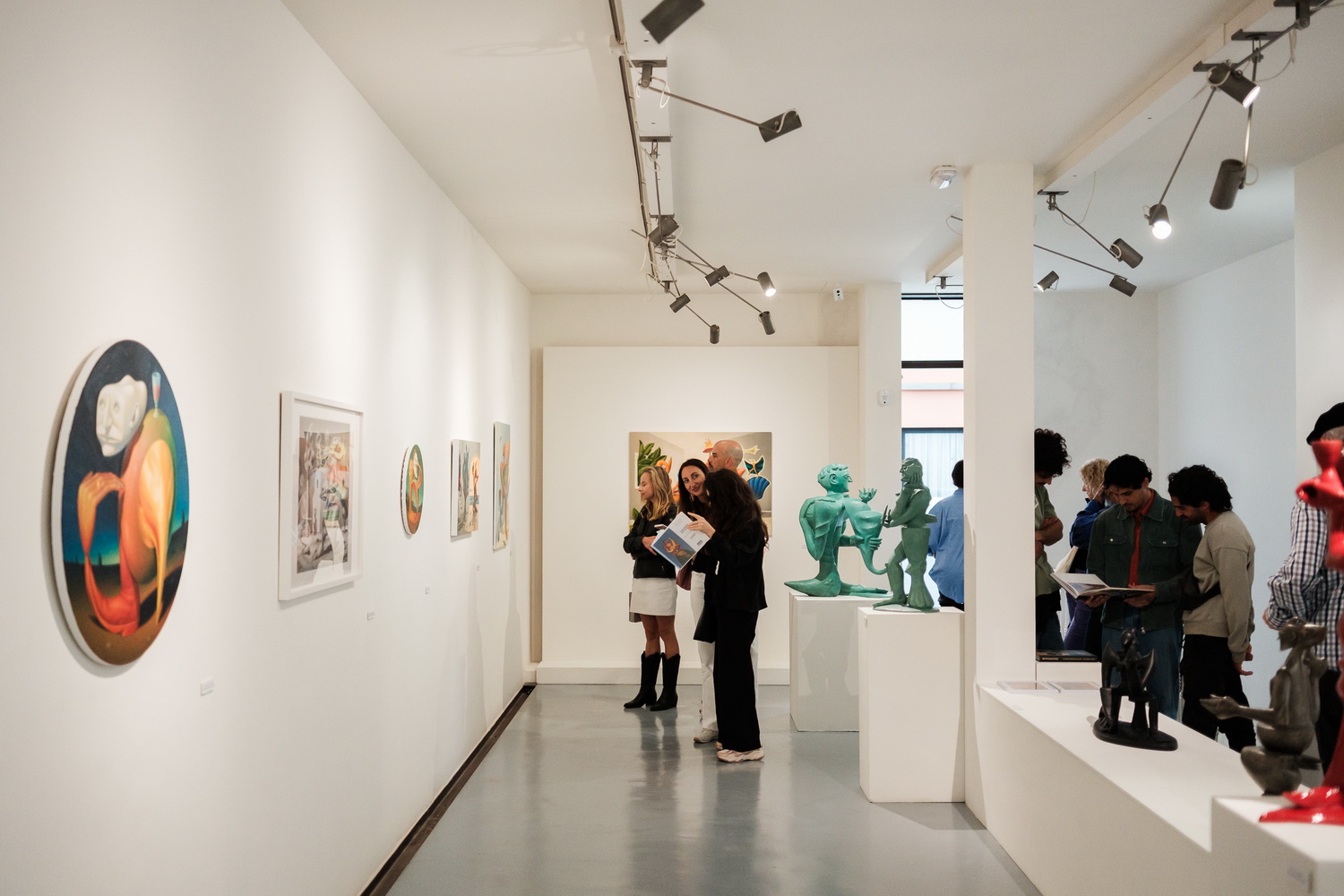
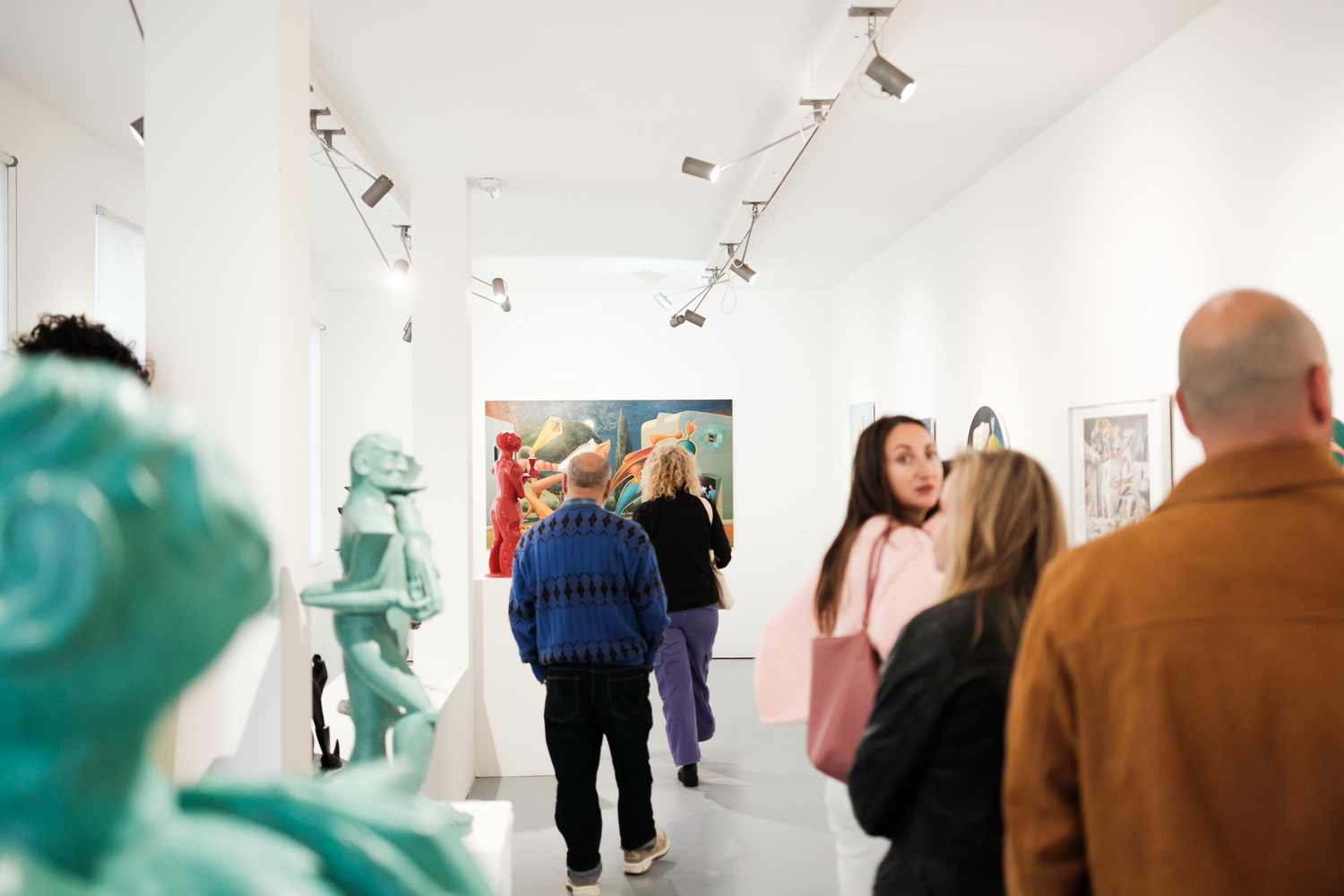
Marine Lucid Dream ehibition was presented in collaboration of Esculturas Bronzo & Sala Bronzo gallery with Adda Gallery. Curator: Anna Dimitrova.
There is a particular state that arrives when the world outside becomes too strange to trust. When the news reads like mythology. When the distance between where you were born and where you now stand feels less like geography, less like exile, and more like the space between sleeping and waking – that trembling threshold where you are no longer certain which side of the dream you inhabit.
The title of this exhibition borrows from the psychology of lucid dreaming – not as a method, and not as a reference to the hypnagogic image-seeking that defined artists like Dalí, but as a precise metaphor for a different kind of consciousness. In a lucid dream, you know you are dreaming. That awareness does not wake you – it makes you a participant rather than a passive observer. You cannot change the dream’s logic, but you can move through it with intention, with agency, with your identity intact. This is the condition Bordusov describes: not surrender to the irrational, but conscious navigation of it.
Marine Lucid Dream gathers the paintings, drawings, and sculptures Aleksei Bordusov has made since 2022, when the war forced him from his Kyiv studio to Tenerife – an island of volcanic stillness and oceanic light, suspended in the Atlantic far from the European continent. The displacement was not chosen. But what followed was neither resignation nor reconstruction. It was something more active and more difficult: a sustained effort to reflect on new circumstances without being defined by them, to preserve a creative identity that belongs to the artist himself – not to the war, not to exile, not to the island – while remaining genuinely open to where he now lives and works.
The literary echo that runs beneath this exhibition is Michel Tournier’s Friday, or, The Other Island – a reimagining of the Robinson Crusoe myth in which the island is not a problem to be solved but a living entity to be understood. Tournier’s Robinson does not simply survive: he is gradually reshaped by the island’s logic, its time, its gravity, its inner life.
What makes this novel the right companion for Bordusov’s work is not the theme of isolation alone, but this precise dynamic: the island as an active force, as living character with its own culture and sensibility. It is not a backdrop. It exerts pressure. It asks something of whoever lives within it.
But where Tournier’s Robinson ultimately watches the ship leave and dissolves into the island’s rhythm, Bordusov’s position is more contested. Tenerife is inside these works – its volcanic light saturates the figures’ skin, the ocean appears behind arched doorways, the landscape conditions everything. And the figures who populate his paintings and sculptures are its inhabitants: not visitors passing through, but creatures who have discovered this island the way all inhabitants do – by feeling it slowly, from the inside, until belonging to it becomes real. Yet that belonging is the result of active reflection, not passive absorption. These figures did not lose themselves to the island. They brought themselves to it, and the encounter changed both.
The figures in Bordusov’s paintings have always operated at the boundary between human and mythological – stretched, fused, carrying objects whose meaning hovers just beyond rational translation. But in the work of this period, that boundary has shifted. These are not figures from a mythology imposed on the island. They are figures shaped by the encounter between a displaced Ukrainian consciousness, the ongoing trauma of war, and the particular sensibility of a volcanic Atlantic landscape that predates all of it.
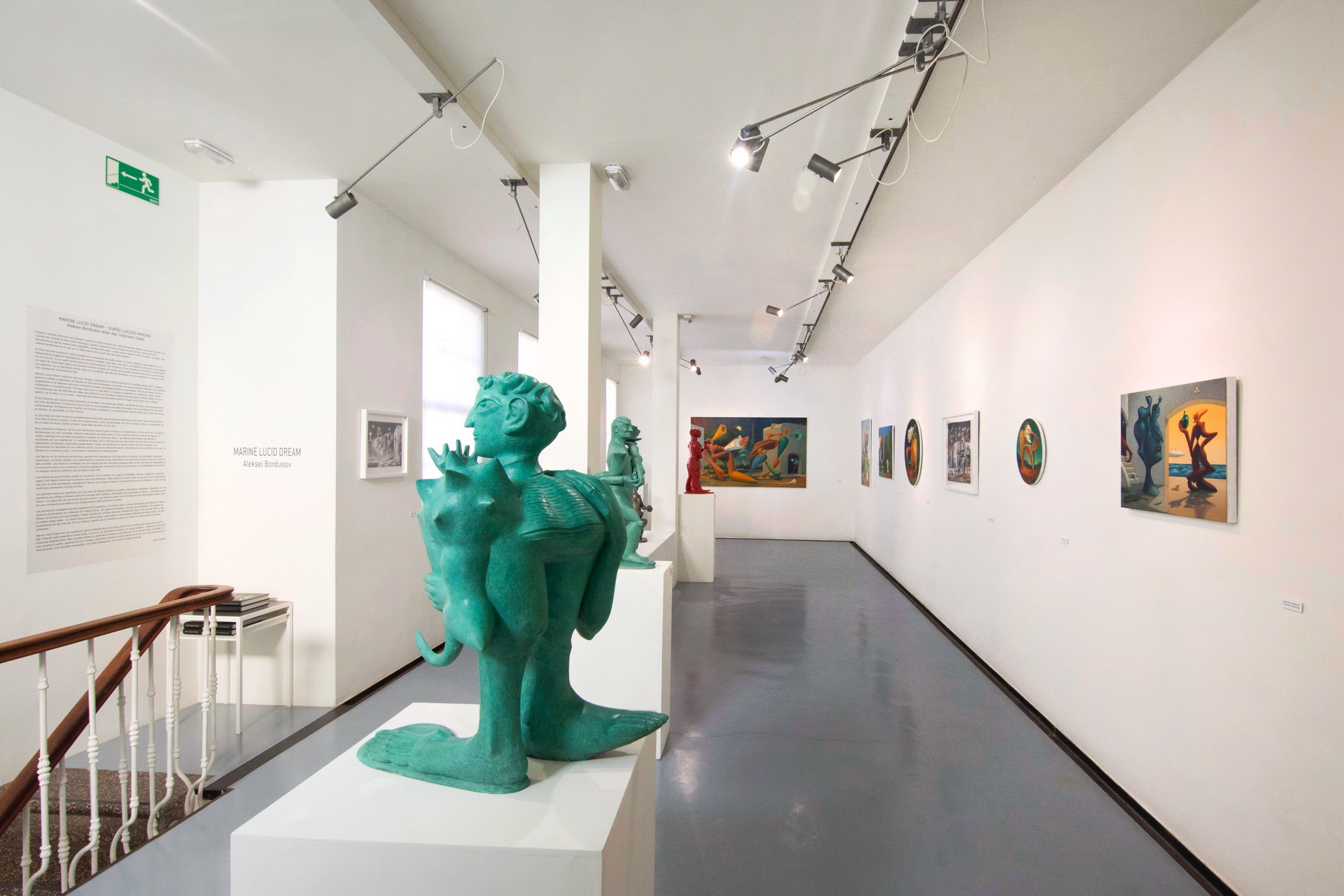
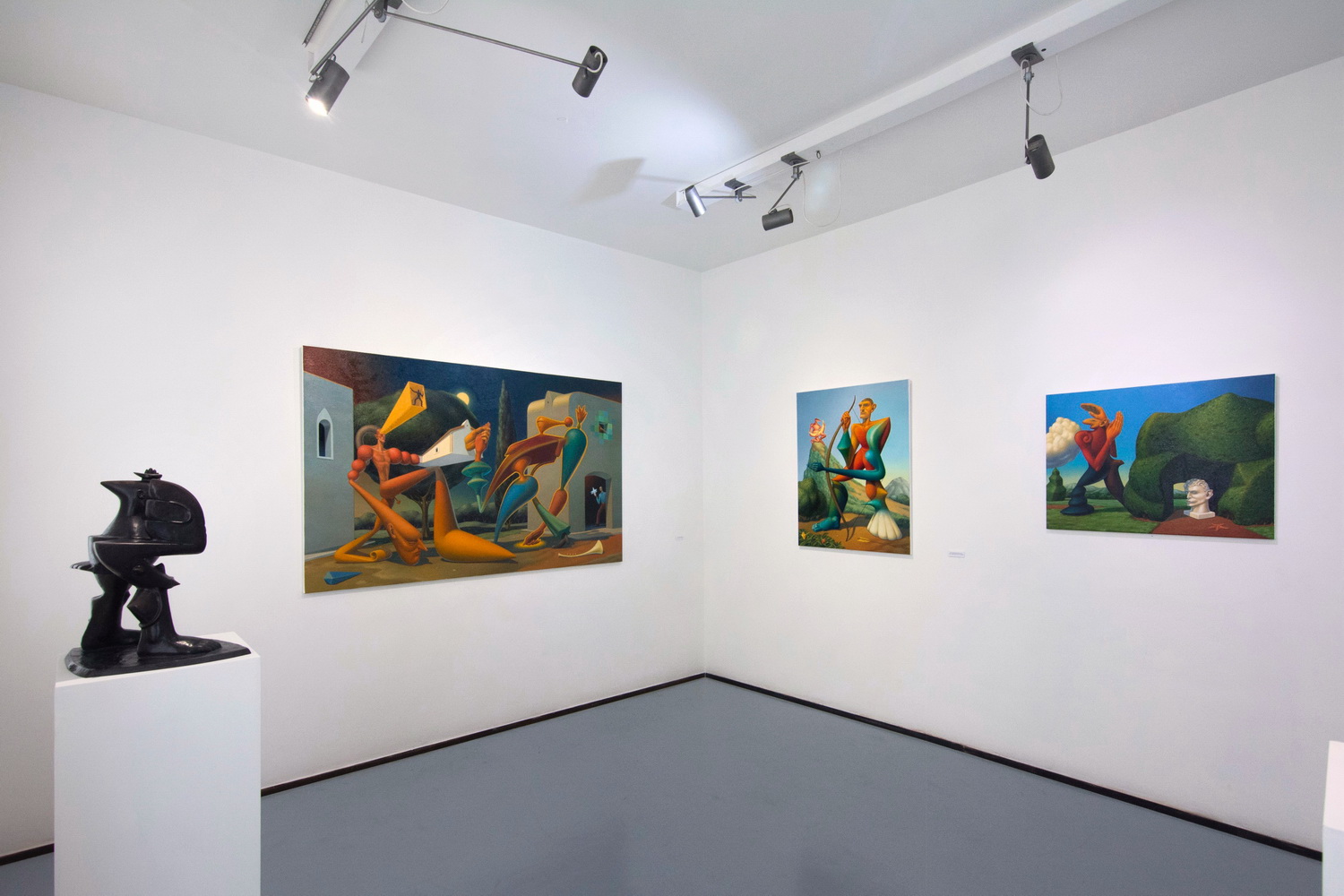
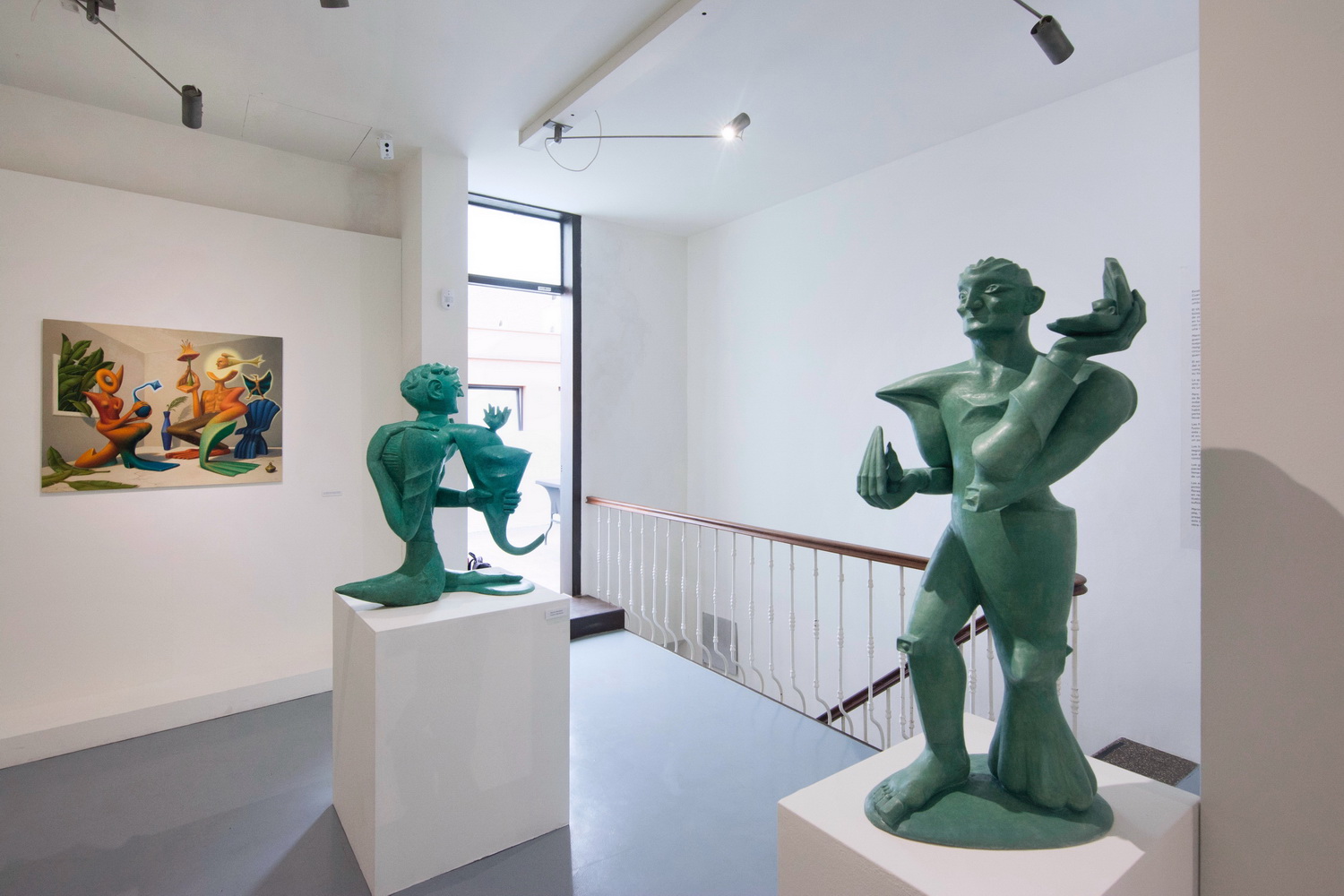
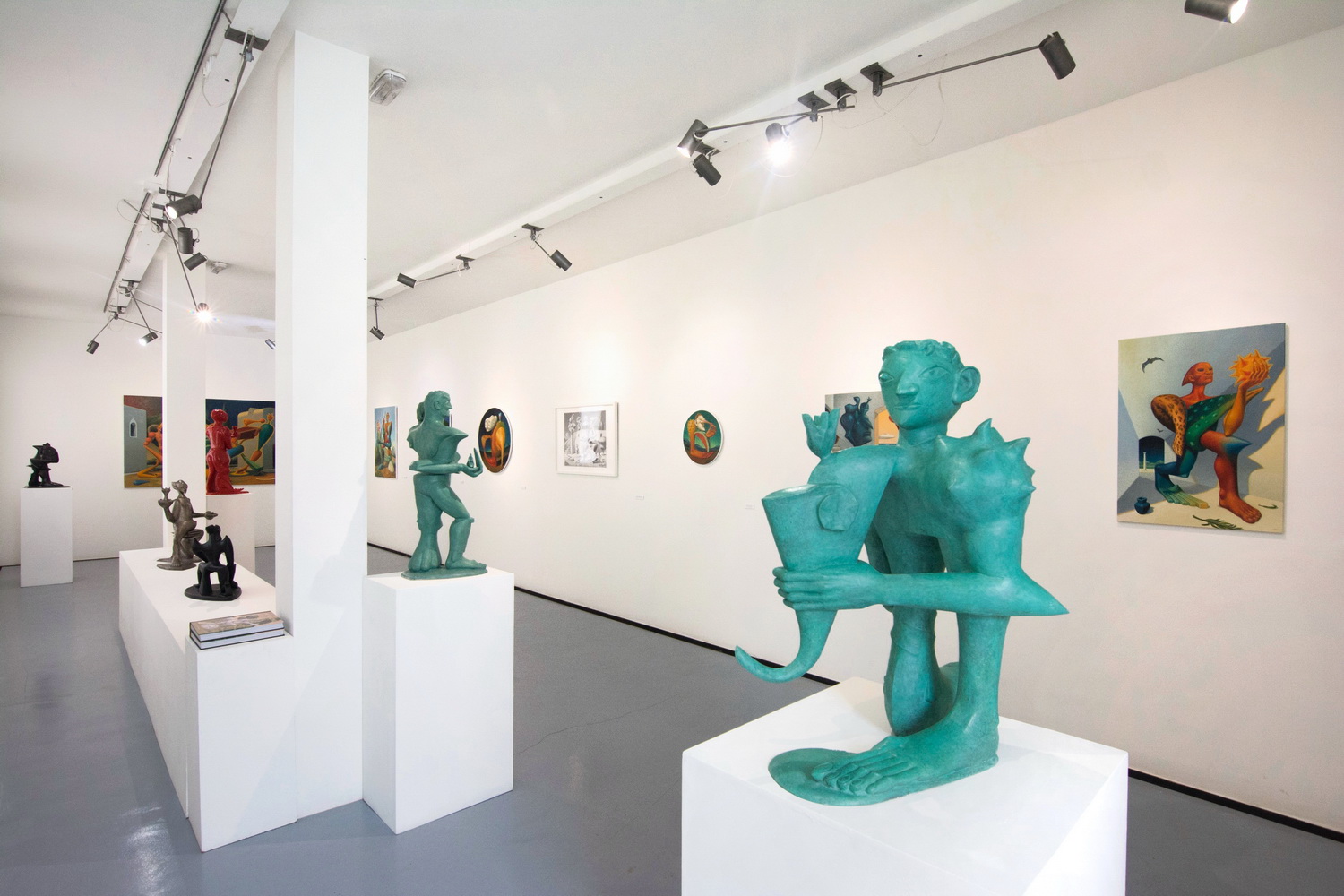
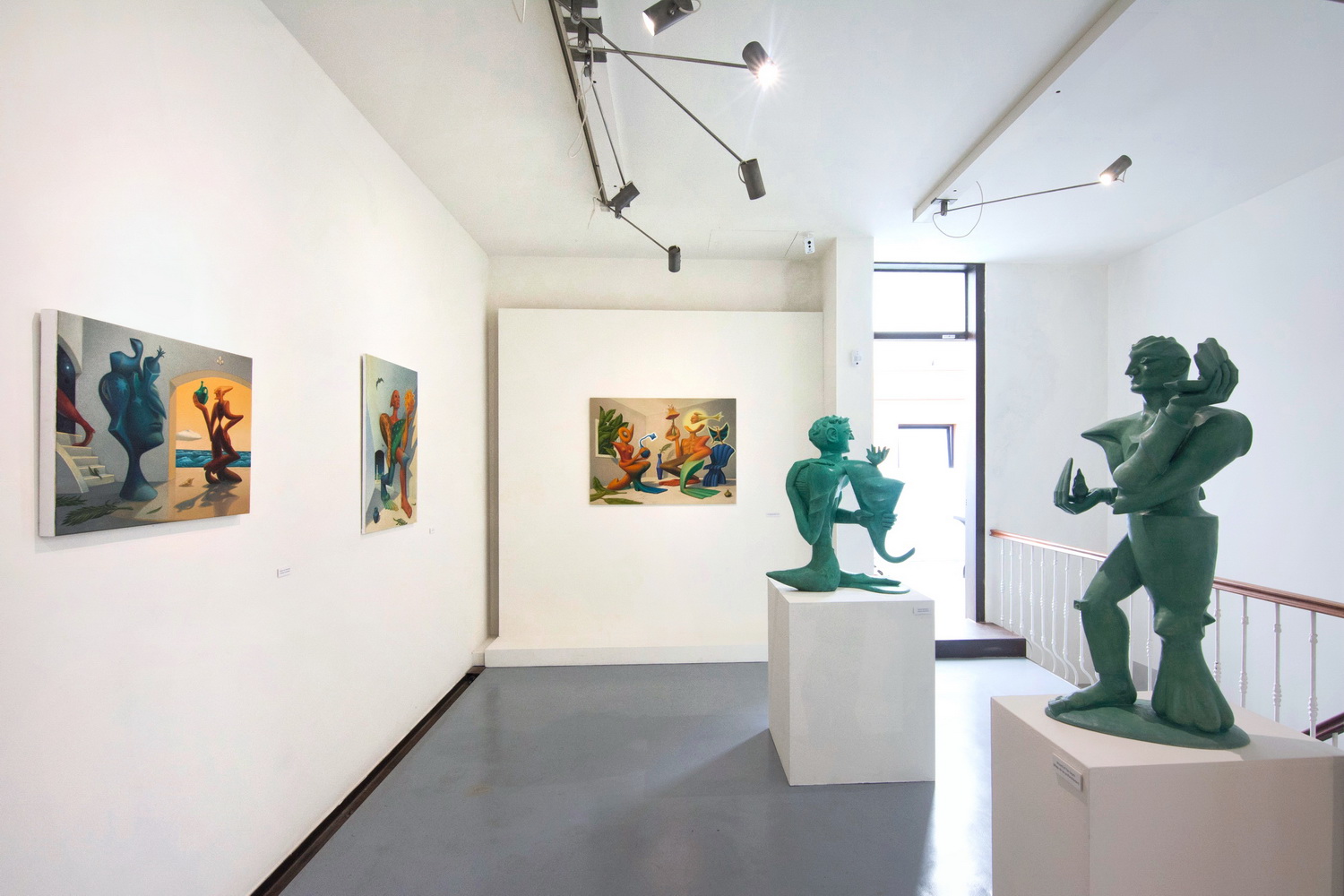
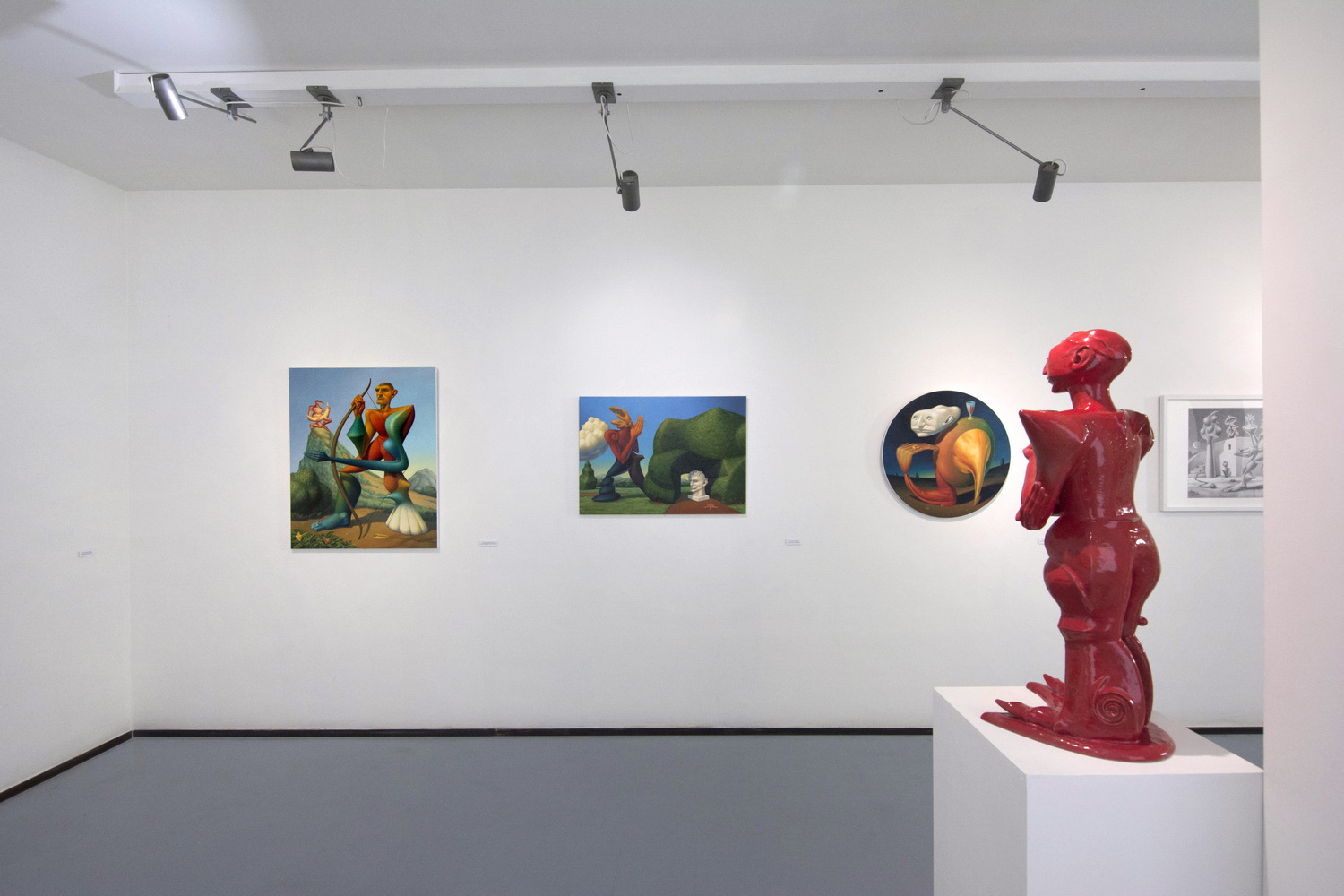
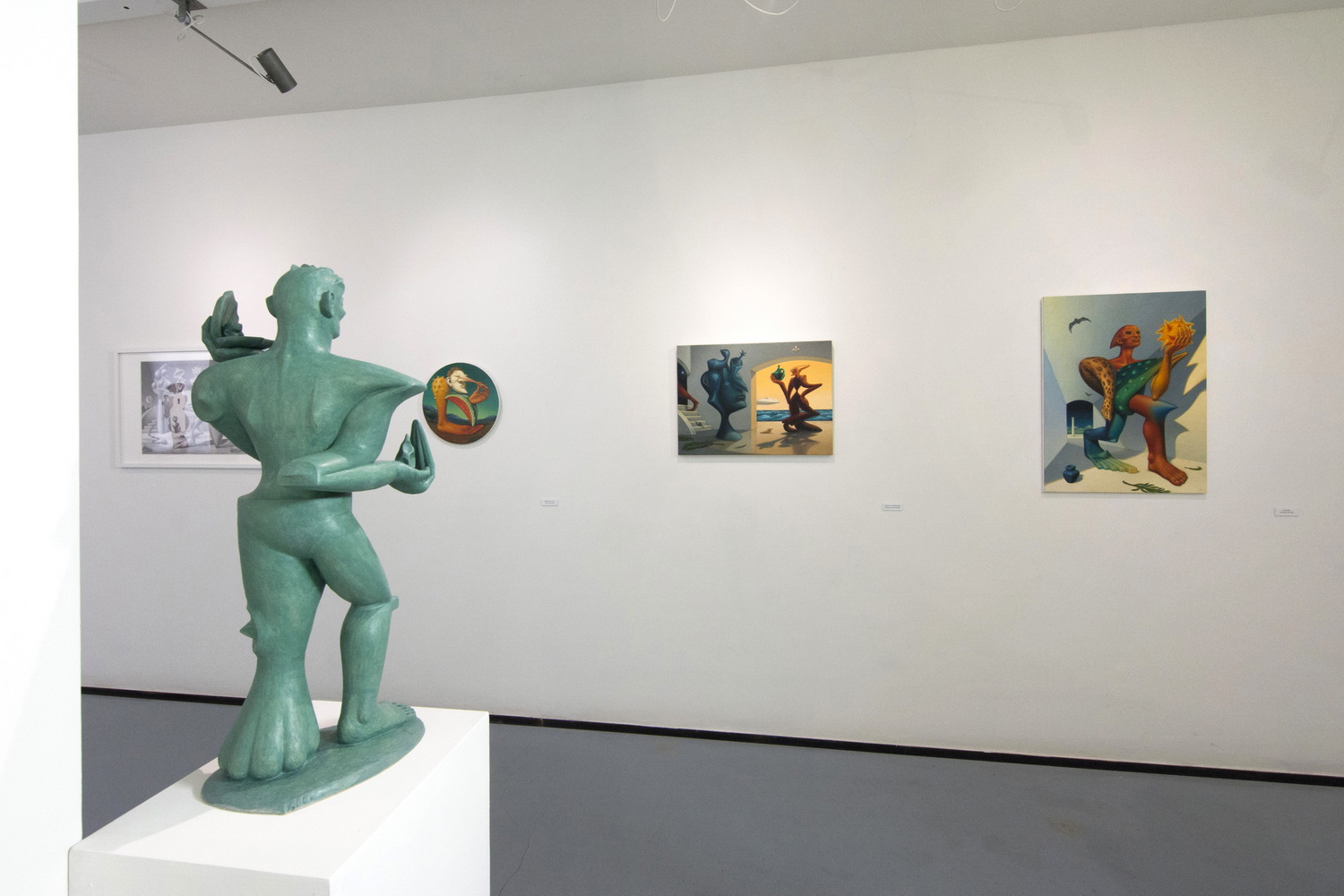
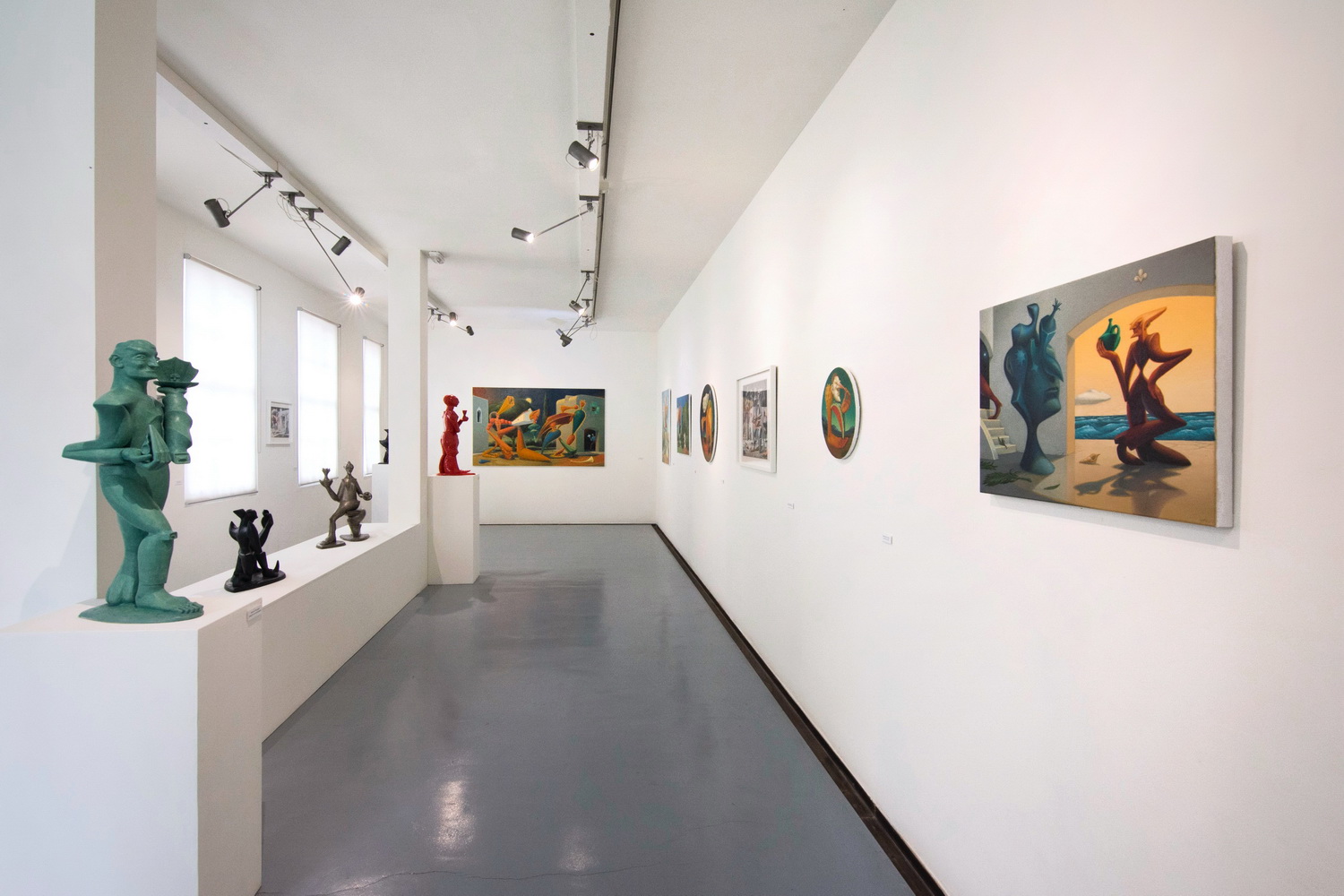
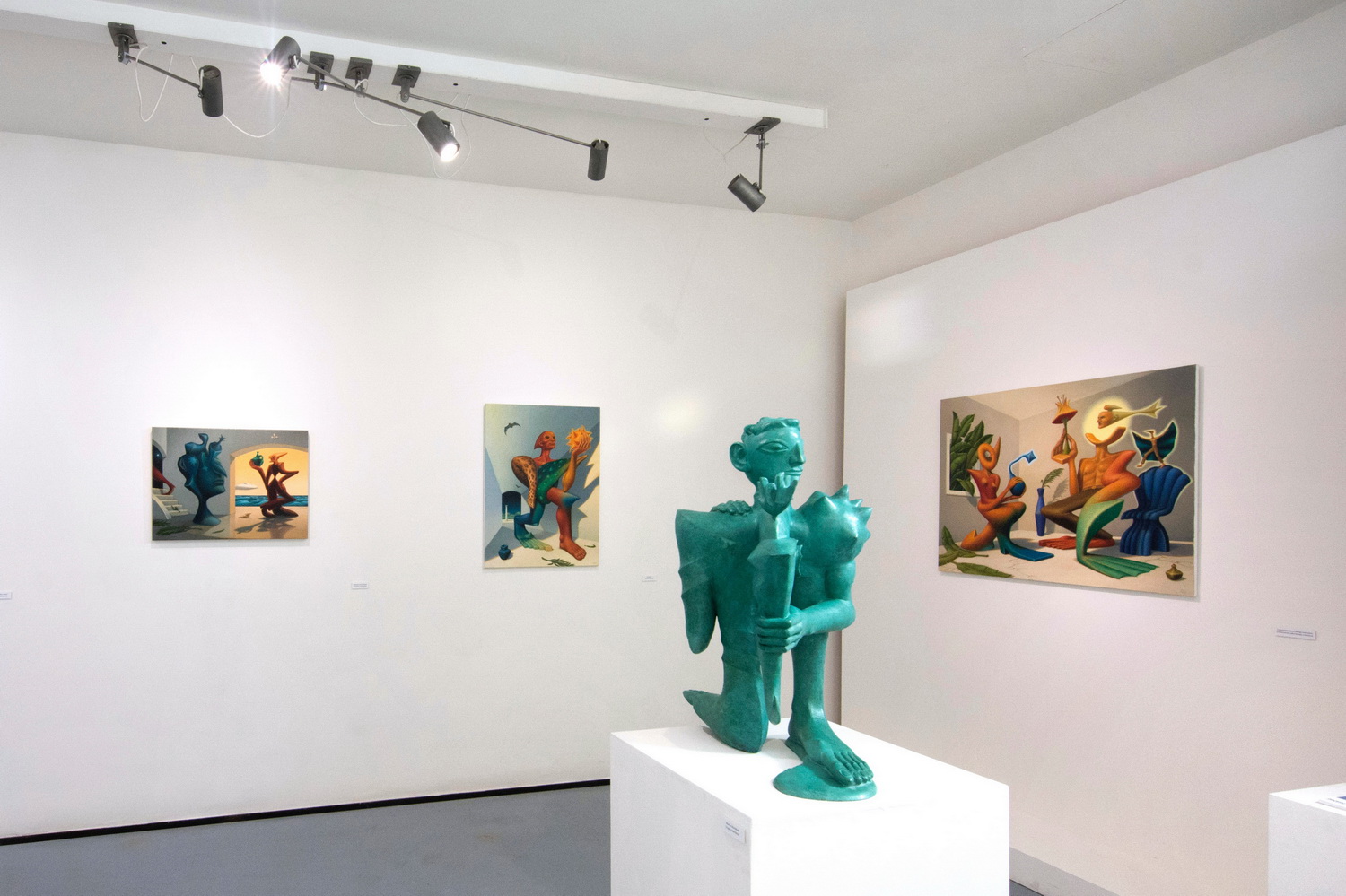
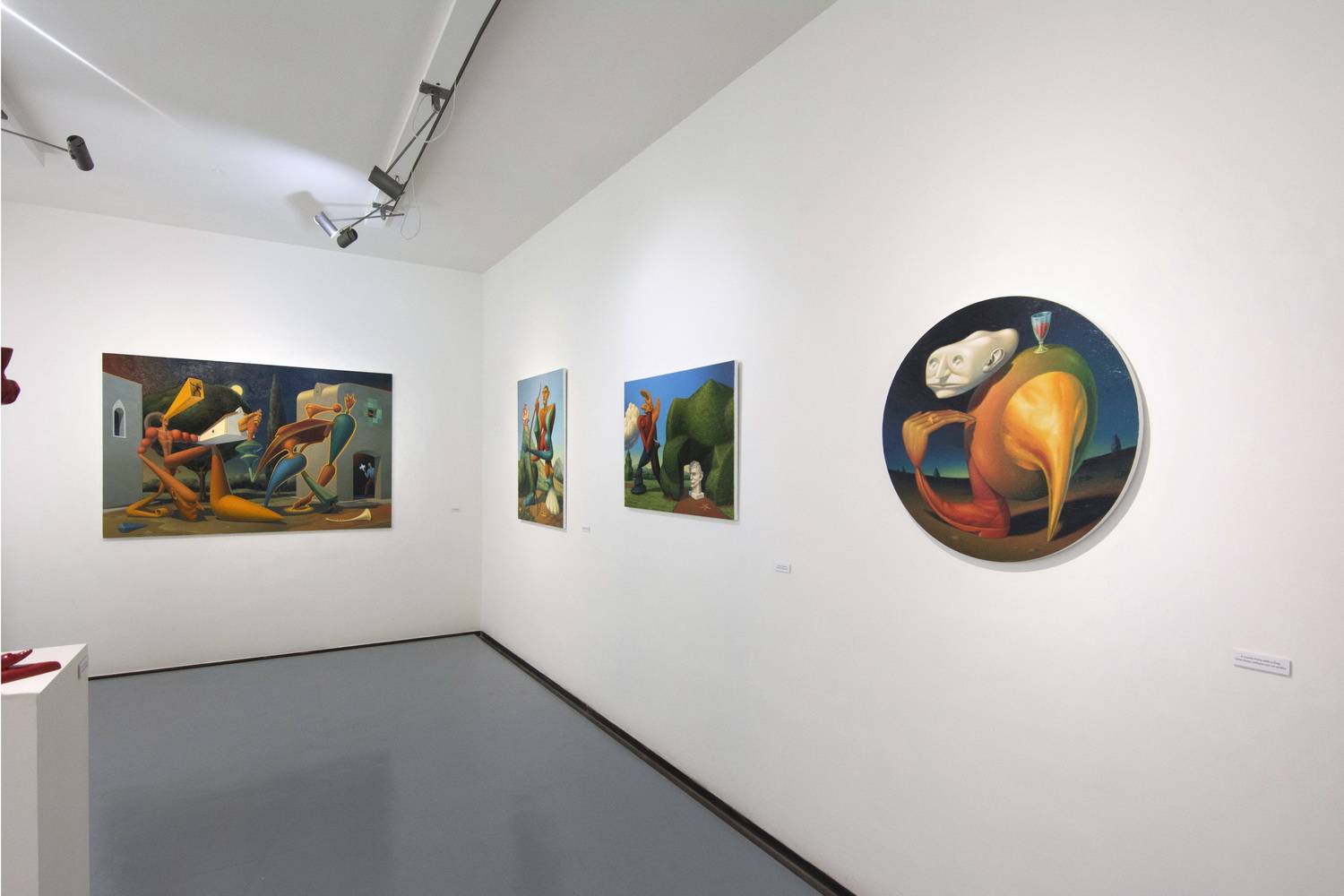
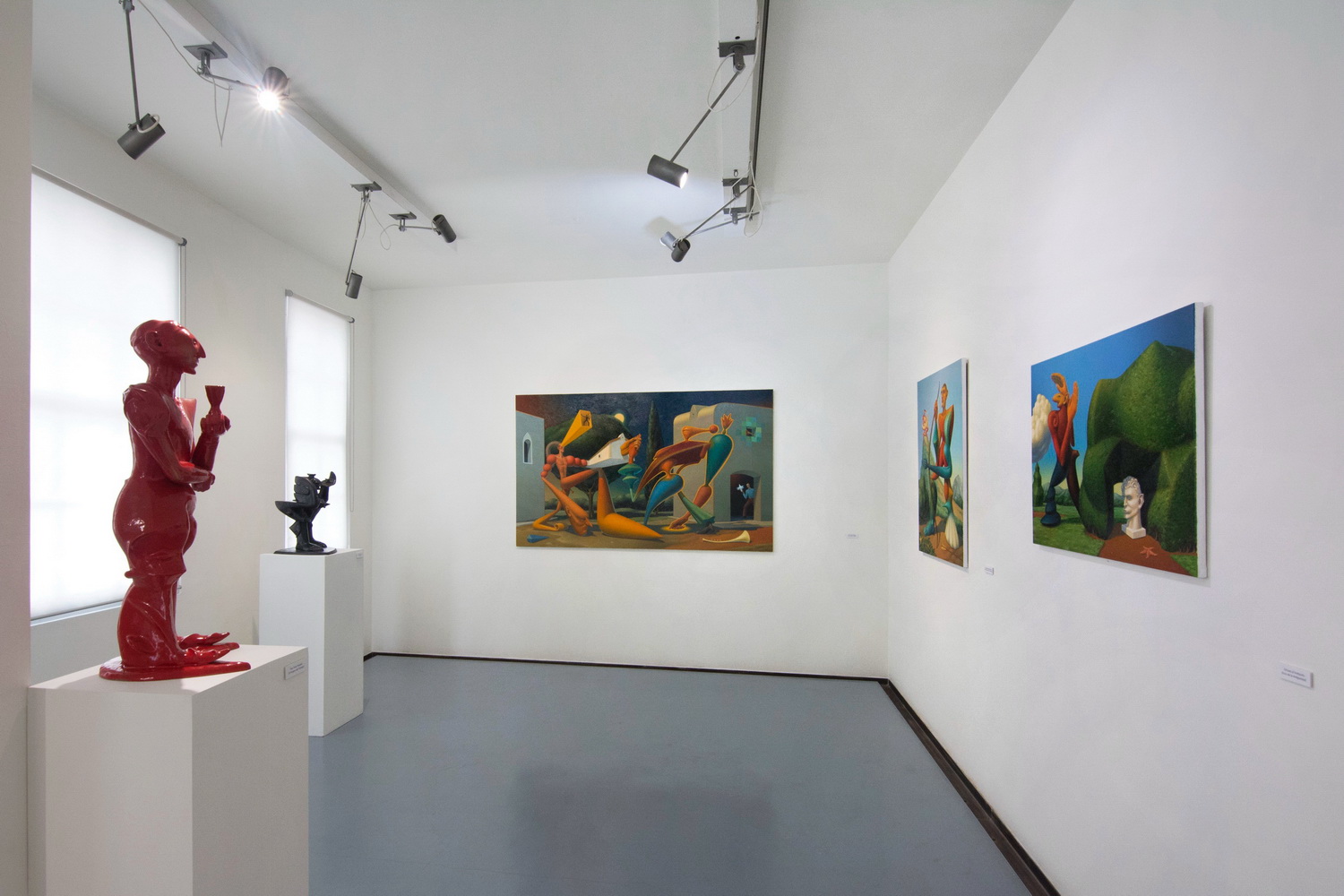
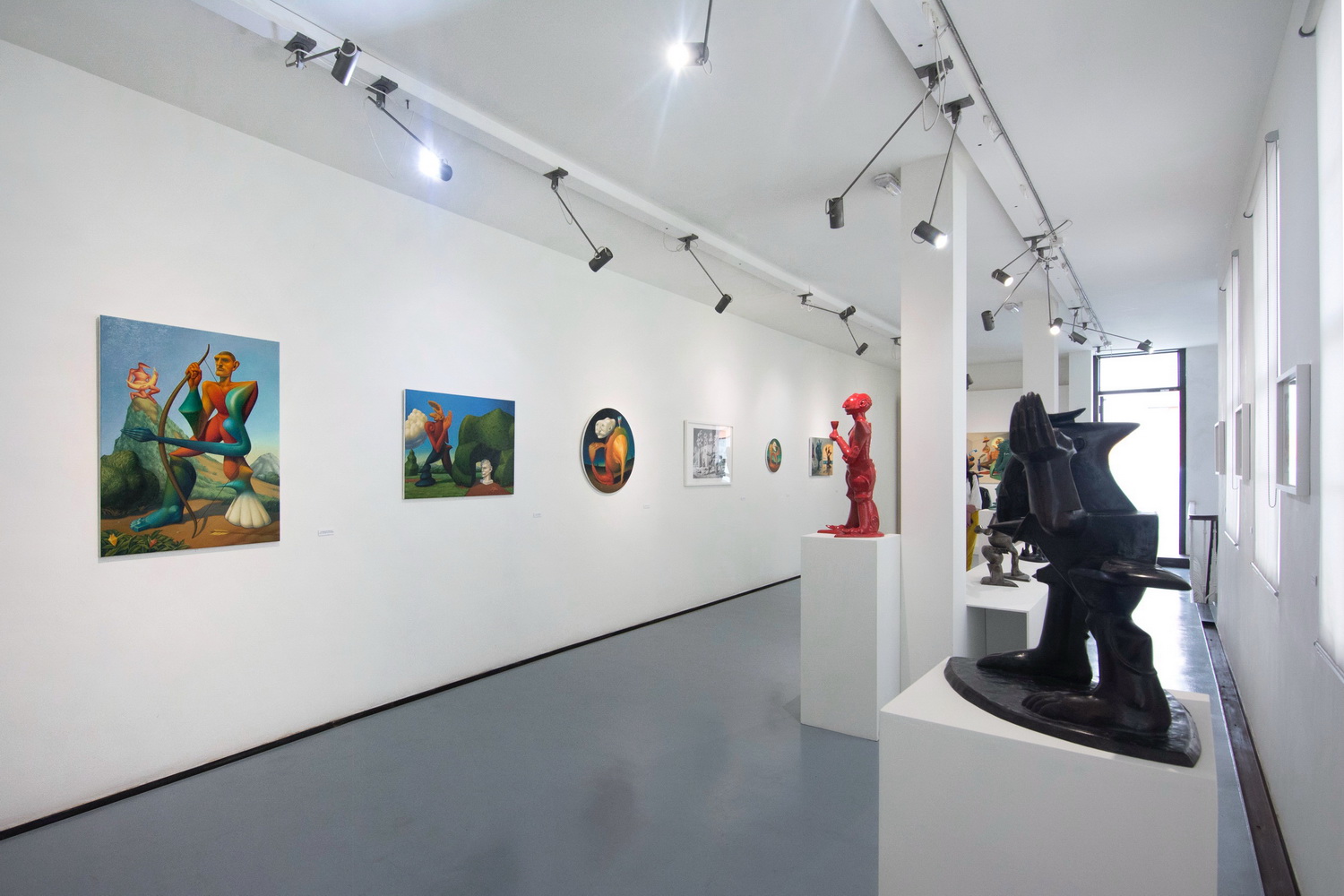
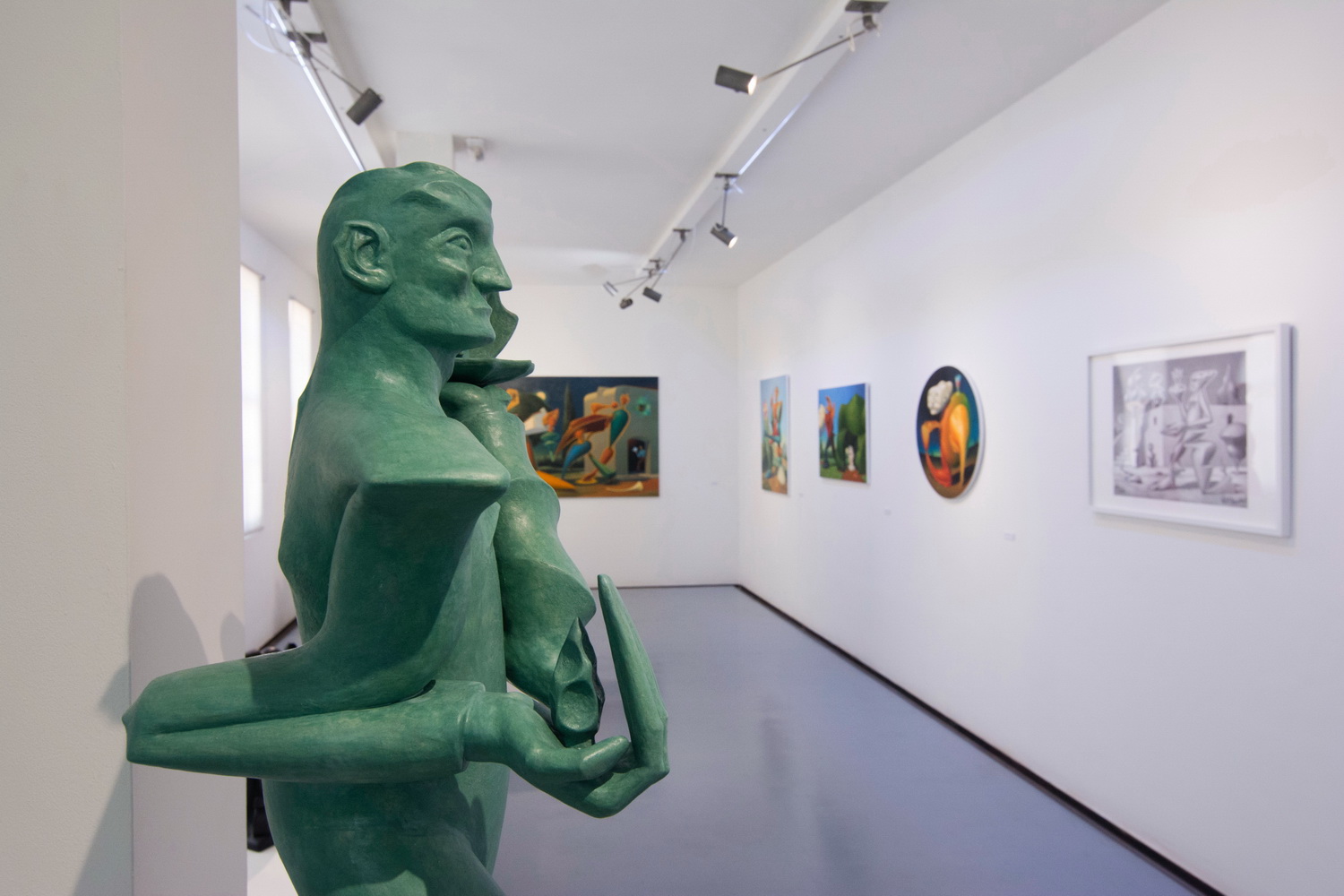
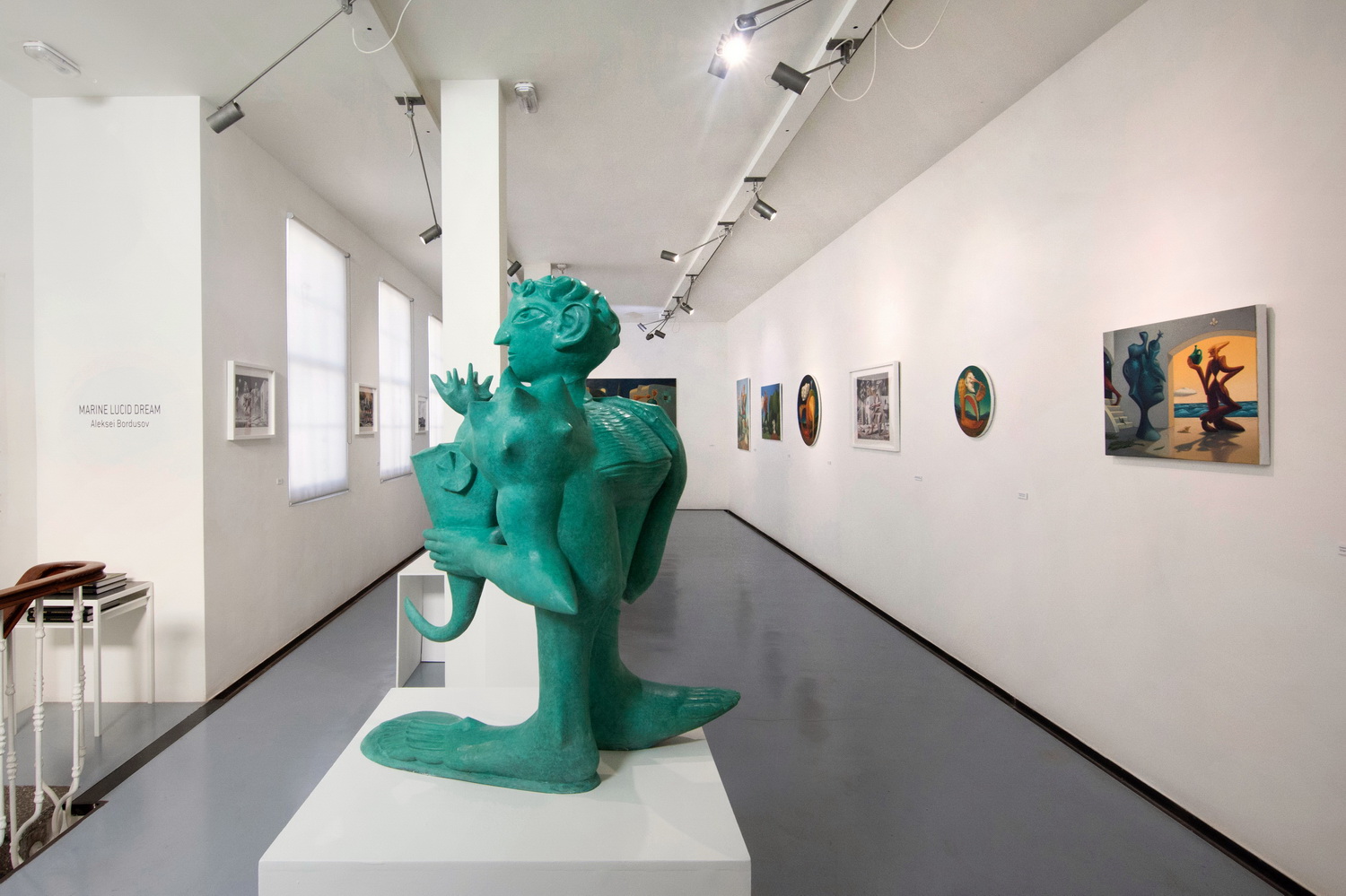
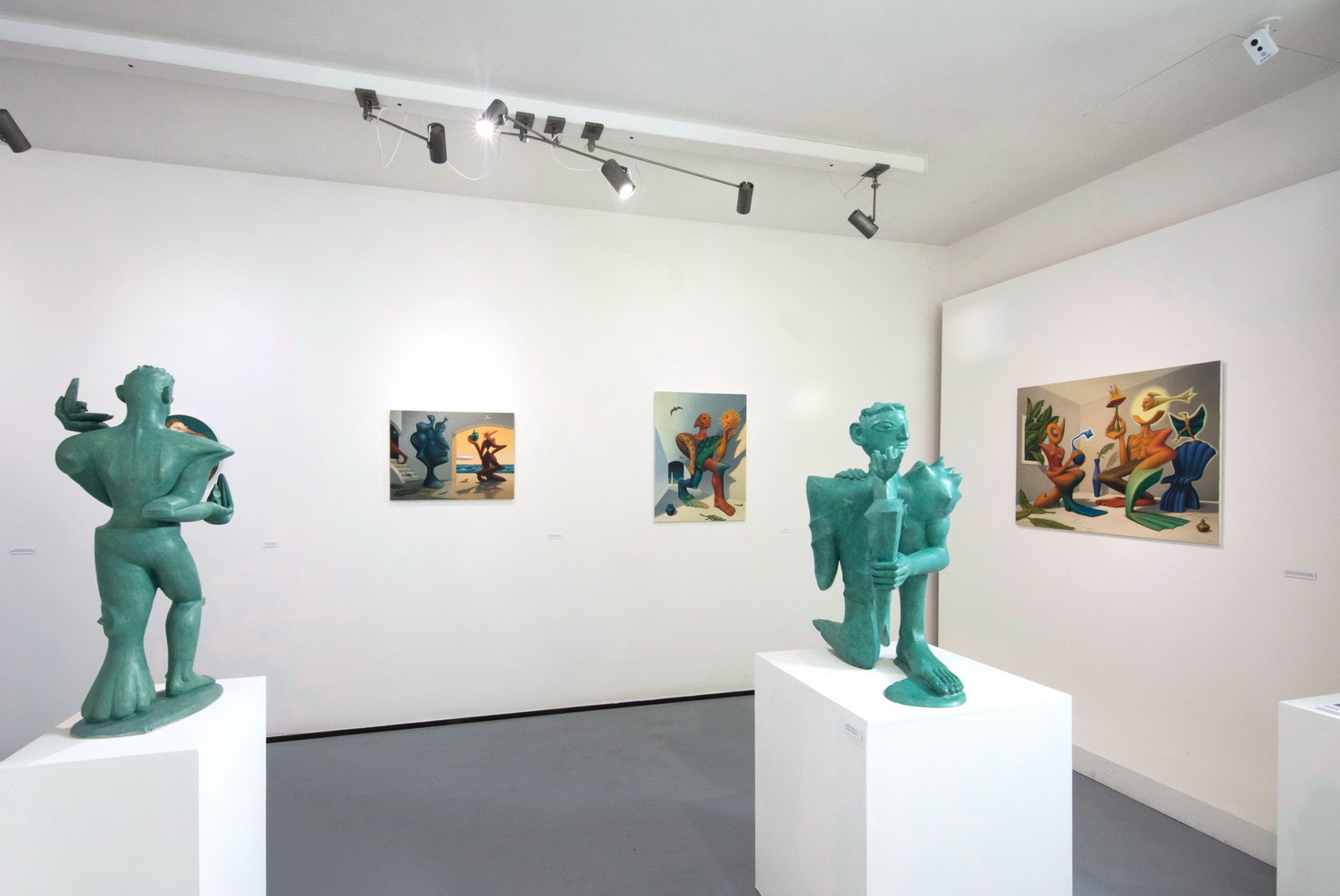
The large-scale canvases anchor the exhibition with a sense of mythological urgency – crowded, allegorical, operating by a dream logic that is precise rather than arbitrary. Each painting feels like a scene from a cosmology still being written, populated by figures who carry the weight of events they did not choose and move through them anyway.
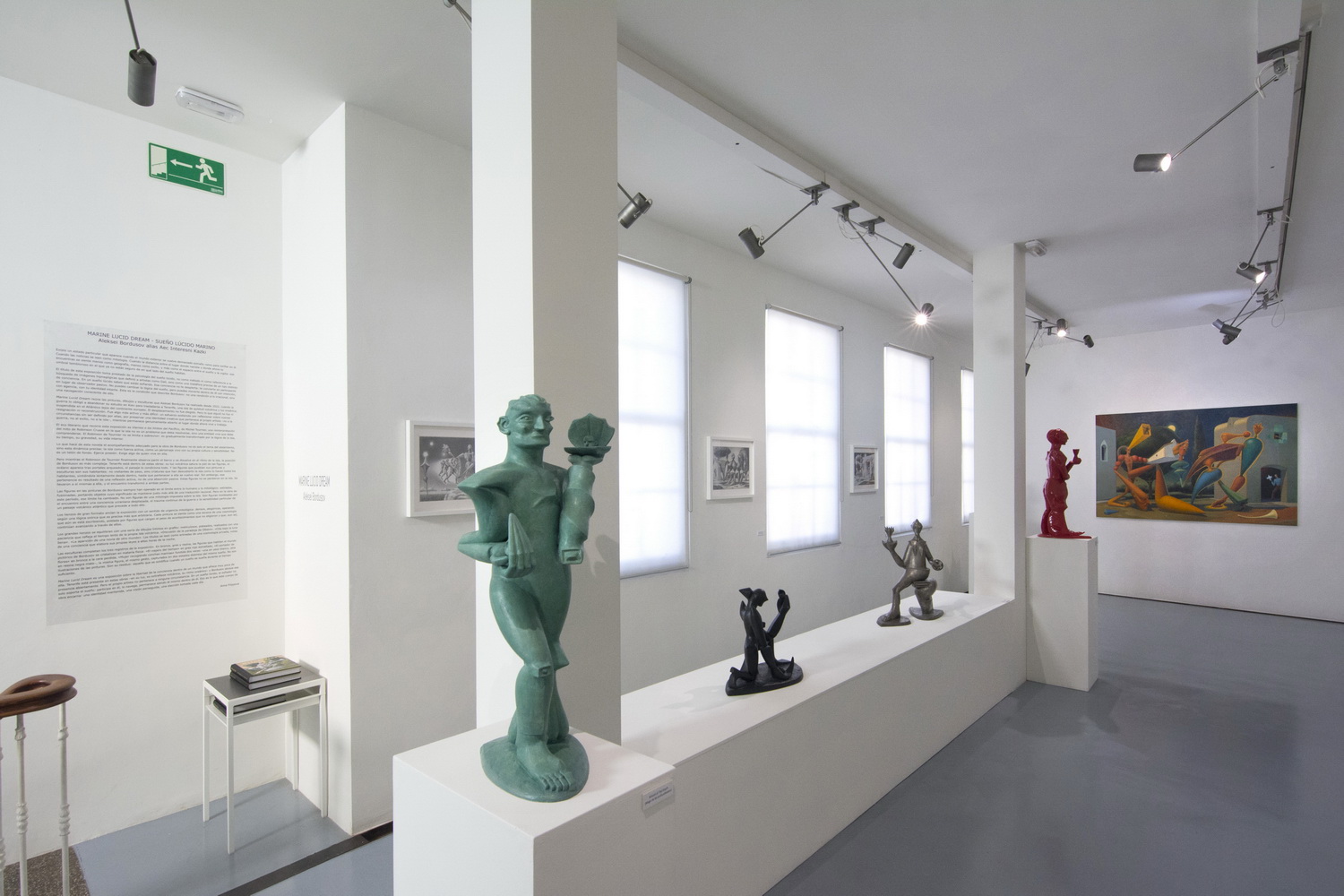
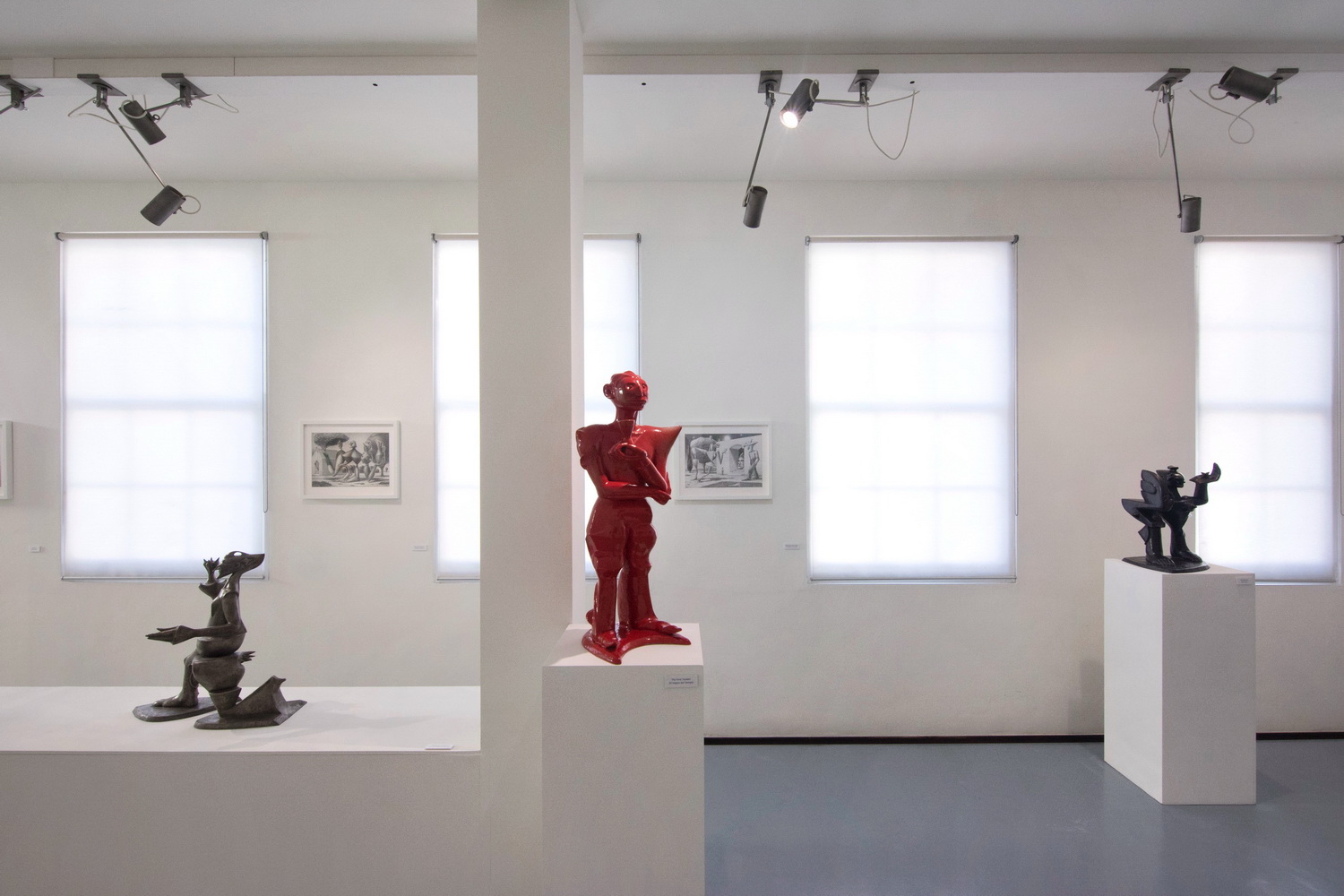
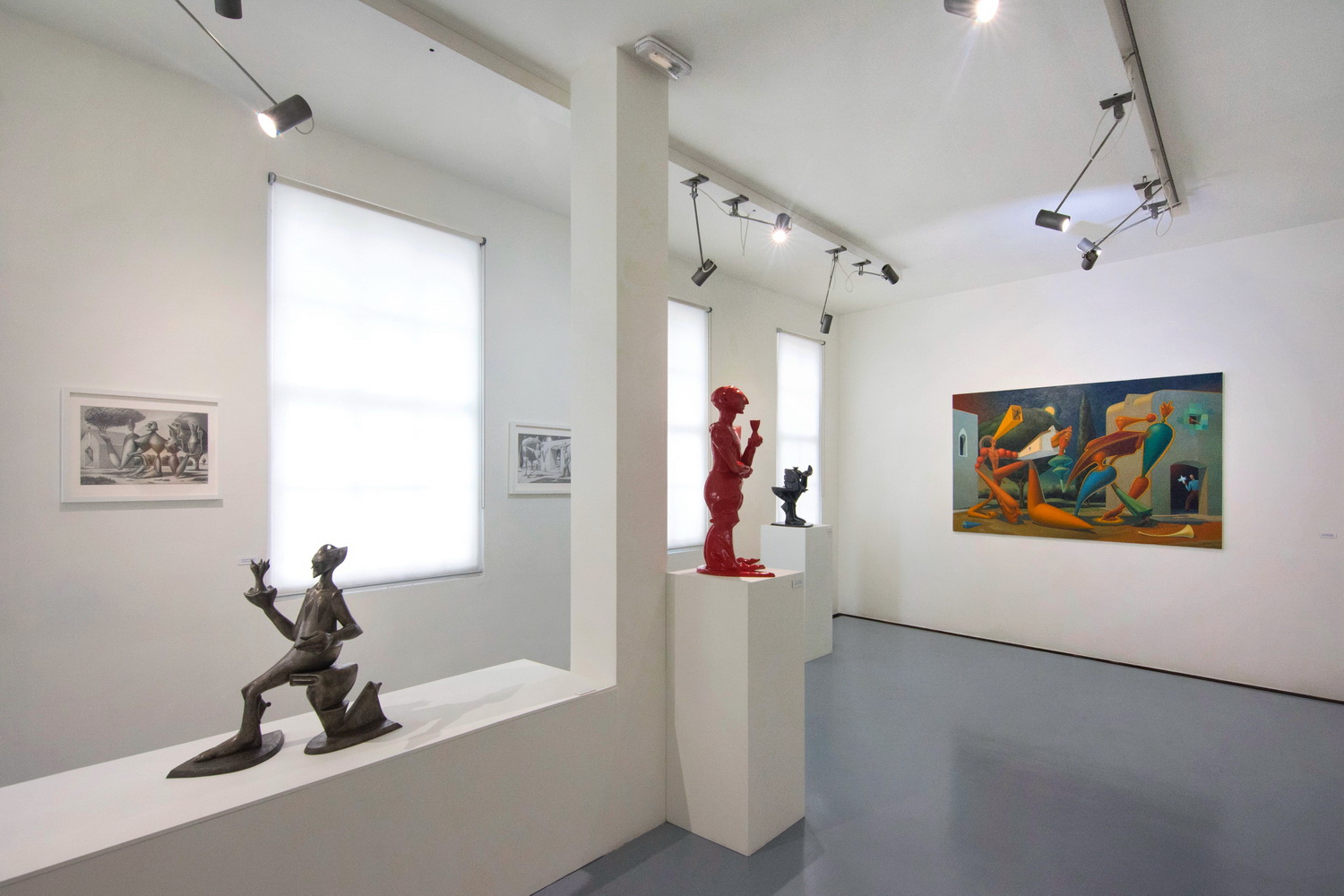
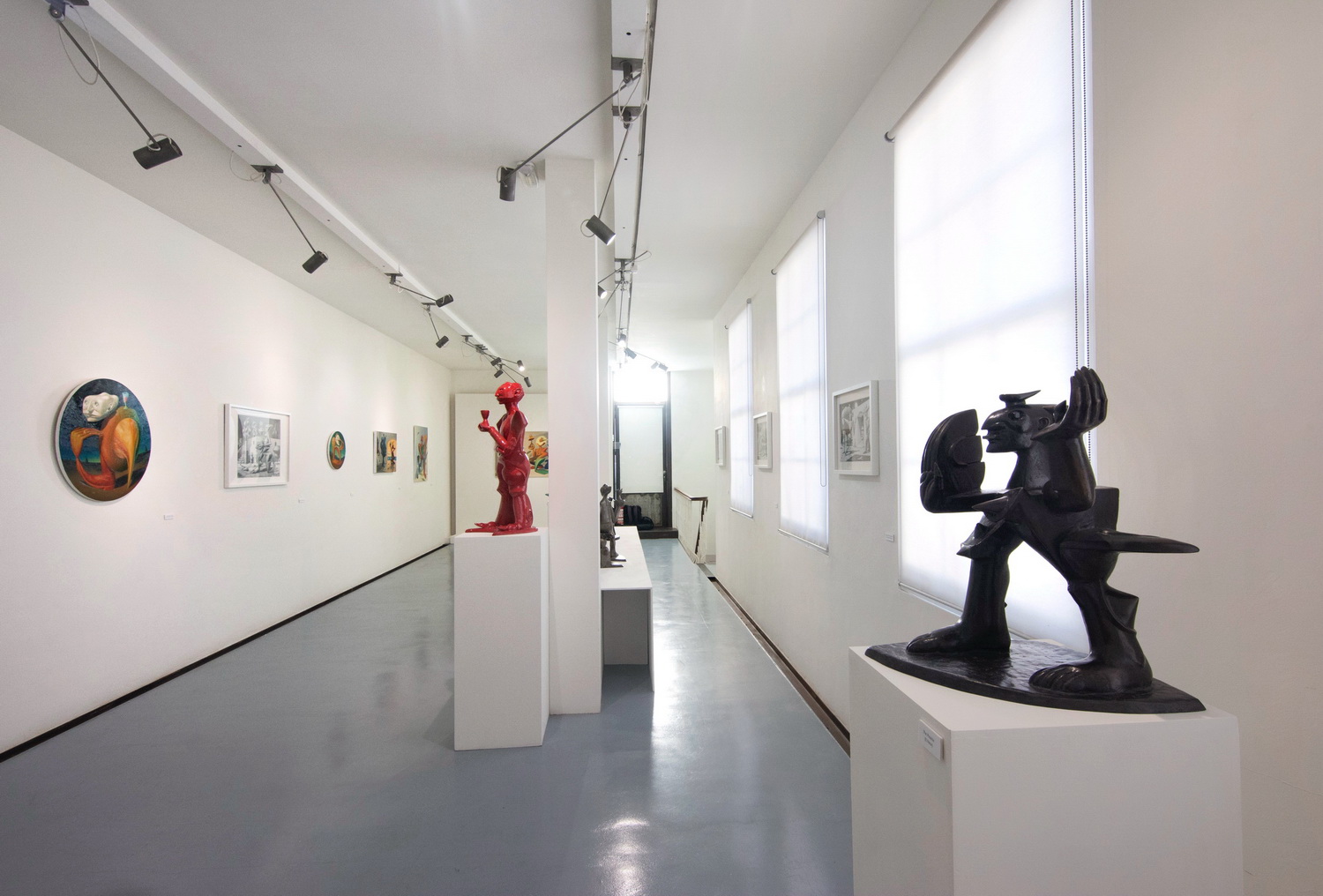
The large canvases are held in tension by a series of intimate graphite drawings – meticulous, silvery, rendered with a patience that mirrors the volcanic island’s own slow time. Olbers’s Paradox Discussion. Date Under the Full Moon. The Appearance of an Otherworldly Bride. The titles read like entries in a private cosmology, notes from a consciousness working out its own new laws at a desk late at night.
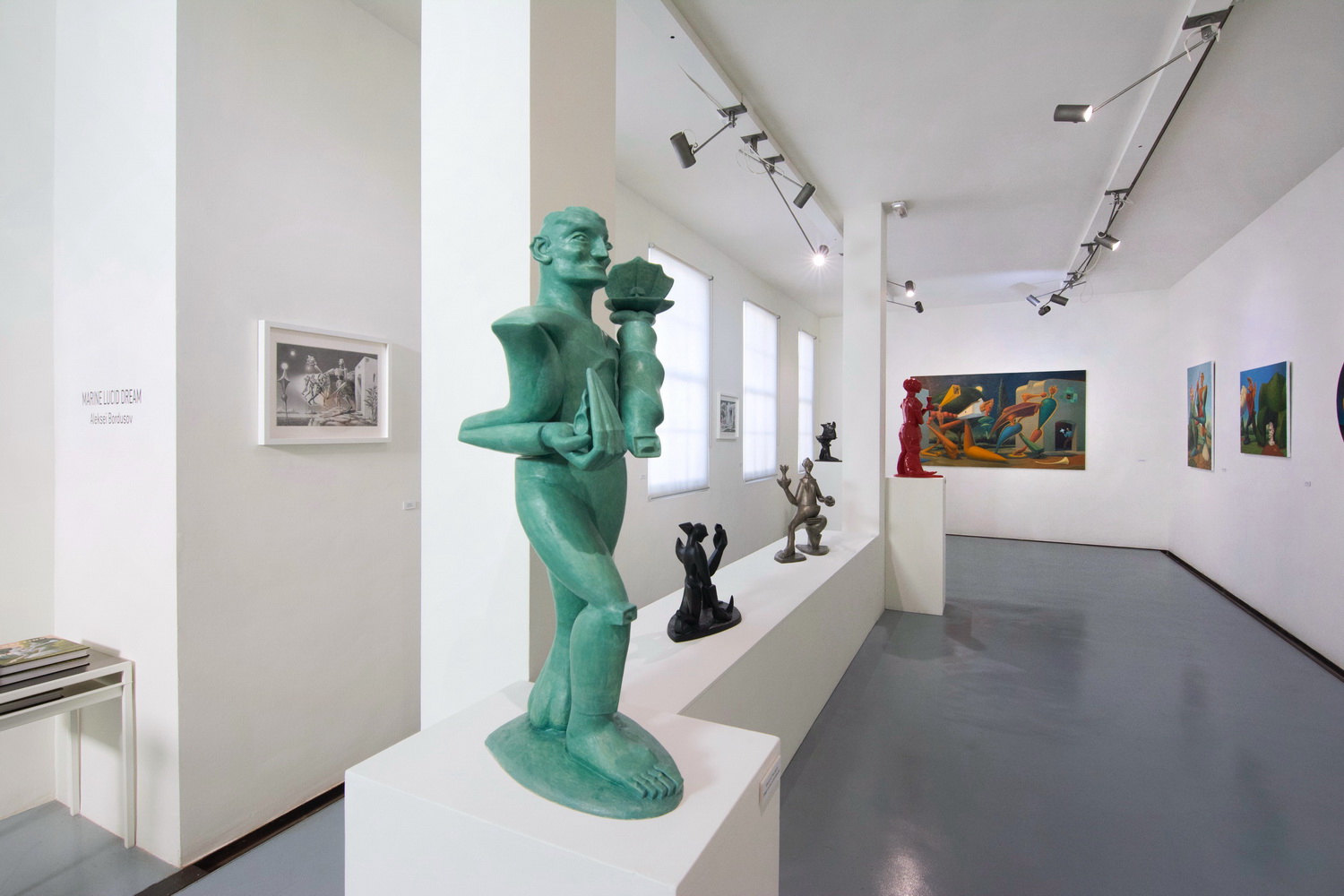
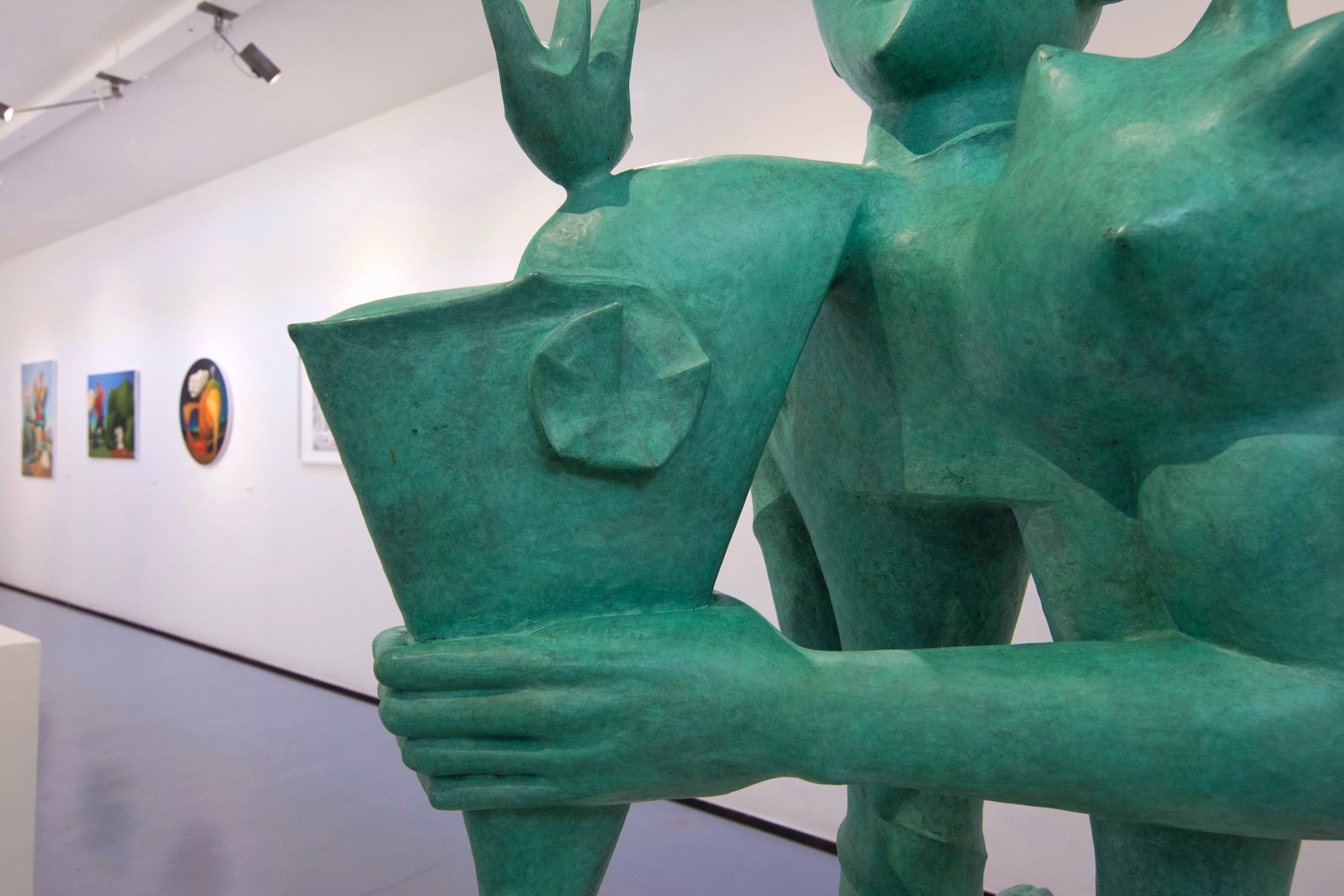
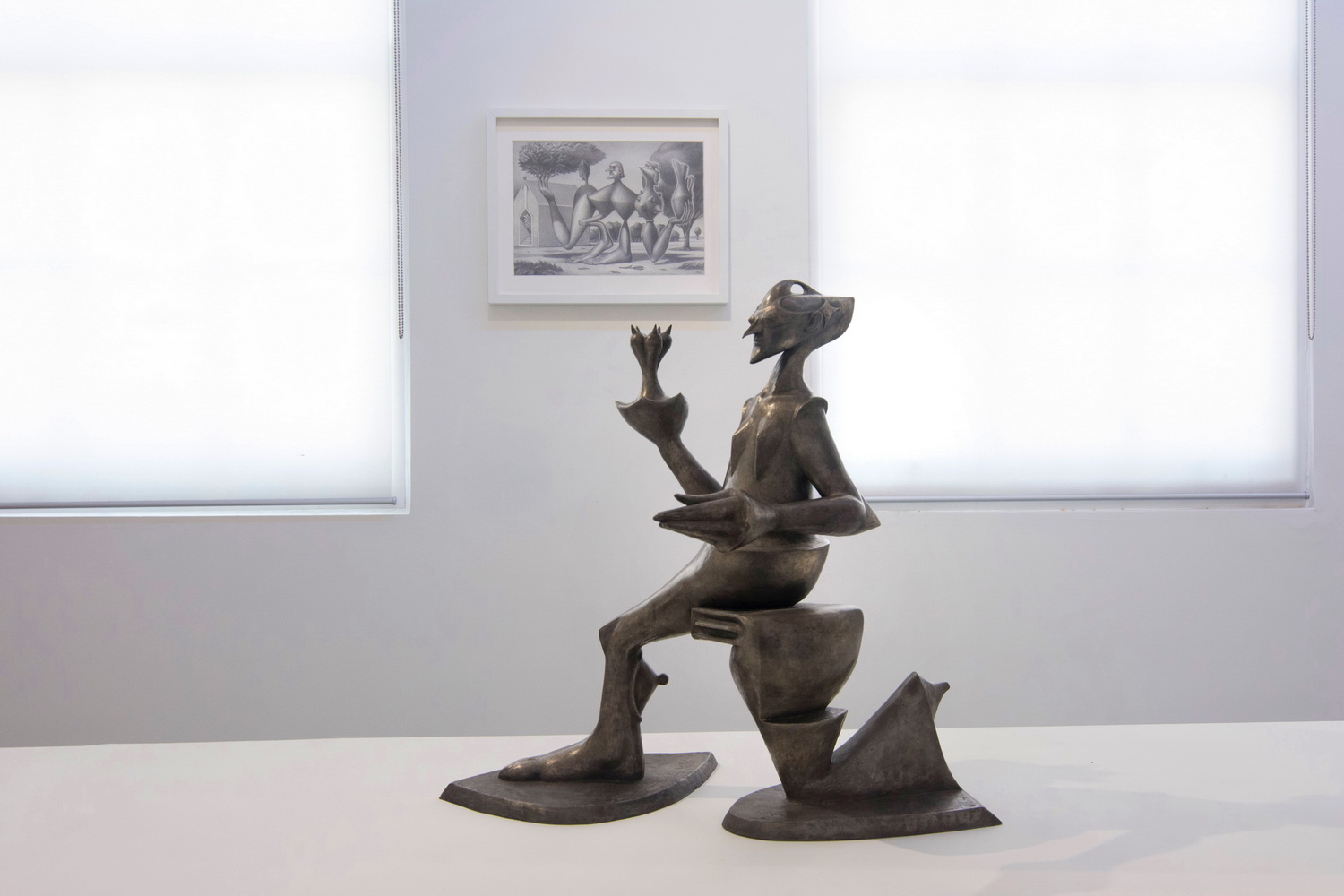
The sculptures complete the exhibition’s three registers. In bronze, stoneware, and resin, the figures that populate Bordusov’s painted world crystallise into physical matter: The Time Traveler in glazed red stoneware, The Blossom Bearer in lost wax bronze, Woman Collecting Seashells cast twice – once in white gypsum, once in matte black resin – the same figure, the same gesture, caught in two different states of the same dream. These are not illustrations of the paintings. They are the paintings’ residue: what solidifies when a dream is dreamed long enough.
Marine Lucid Dream is an exhibition about freedom of consciousness inside a world that offers very little of it. Tenerife is present in these works – in their light, their volcanic strangeness, their oceanic rhythm – and Bordusov embraces that presence openly. But the artist himself belongs to no circumstance. In a lucid dream, the dreamer does not simply endure the dream: he participates in it, navigates it, remains himself within it. That is what this body of work enacts – an identity maintained, a vision pursued, a choice made every day.
Text by Anna Filippova.
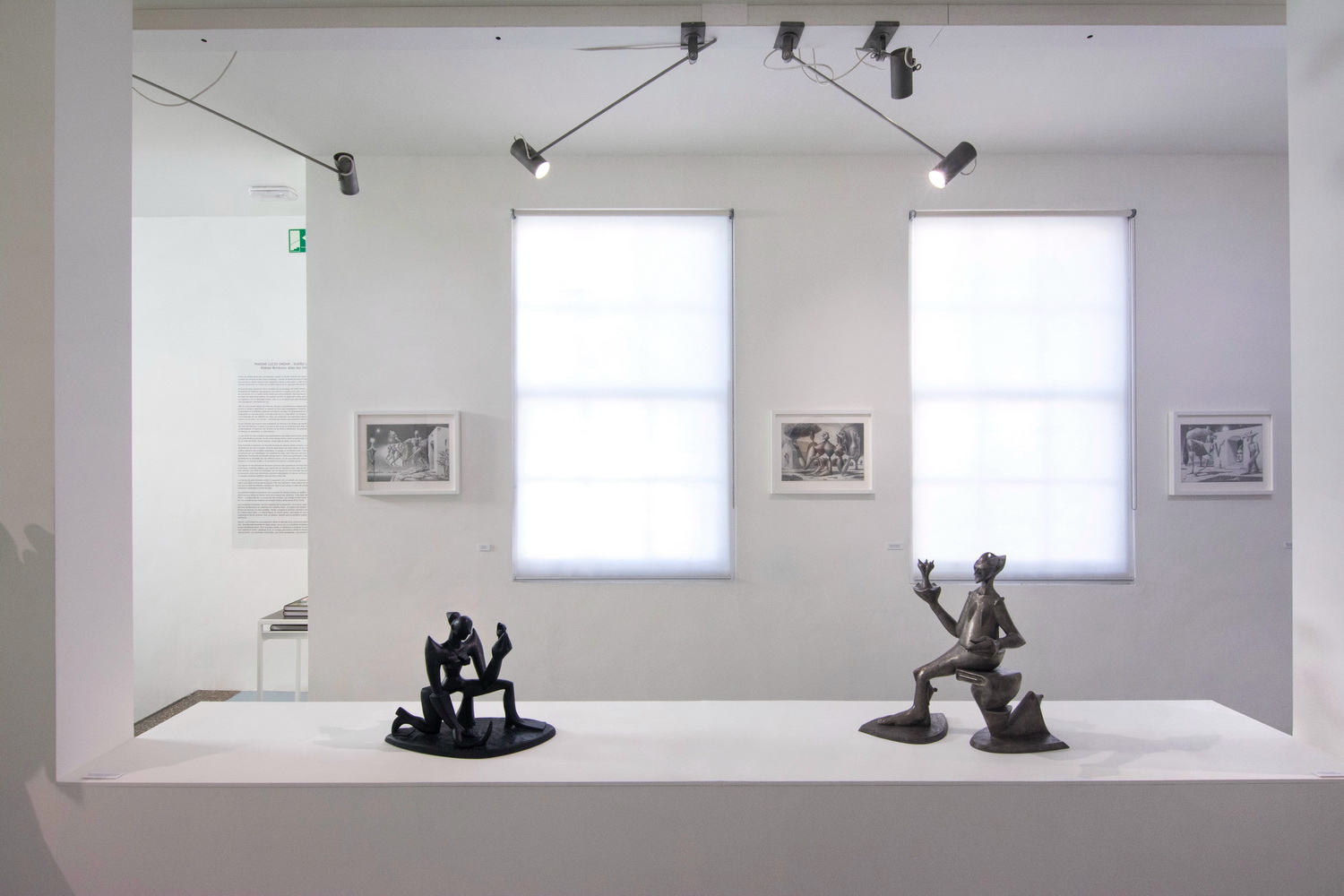
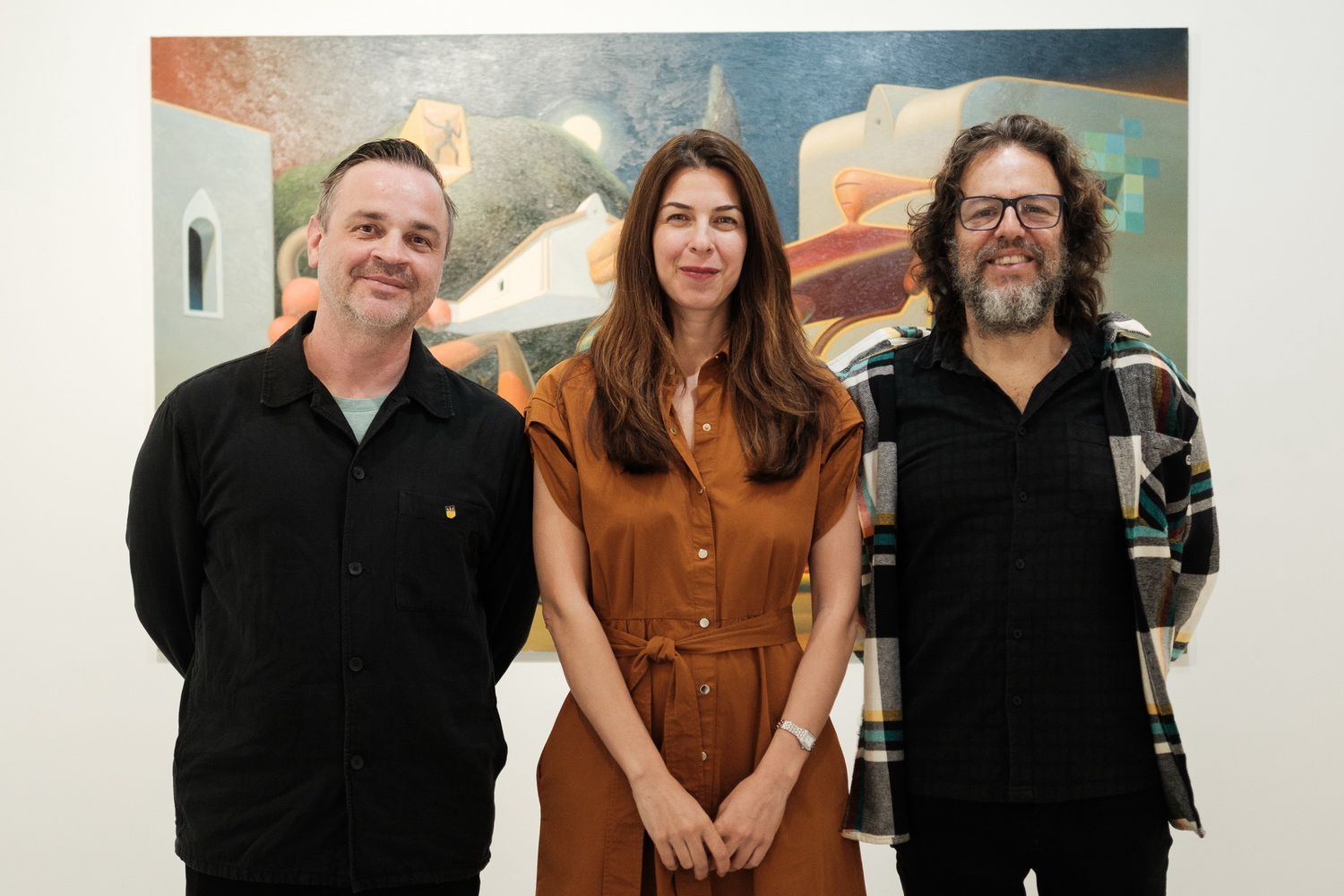
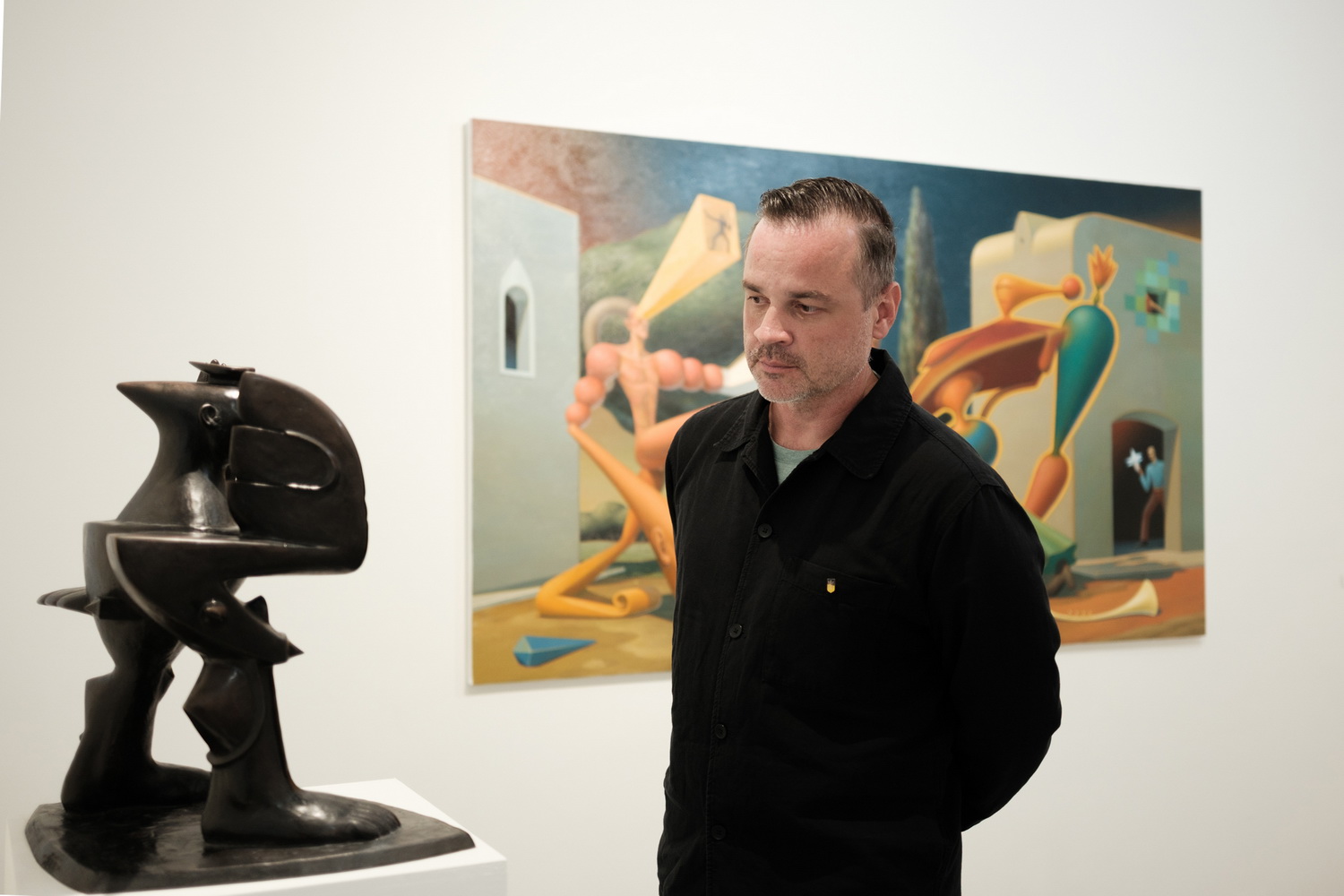
Opening reception. Pictures by Rhaul Santana